
Baidyanath, also called Baba Baidyanath Dham, stands in Deoghar in Jharkhand. The temple trust counts it as the ninth of the twelve Jyotirlingas of Lord Shiva. This guide walks through the visit in the order you meet it: the timings, the darshan, the legend, the complex and the busy seasons, using what the trust and the Deoghar district publish.
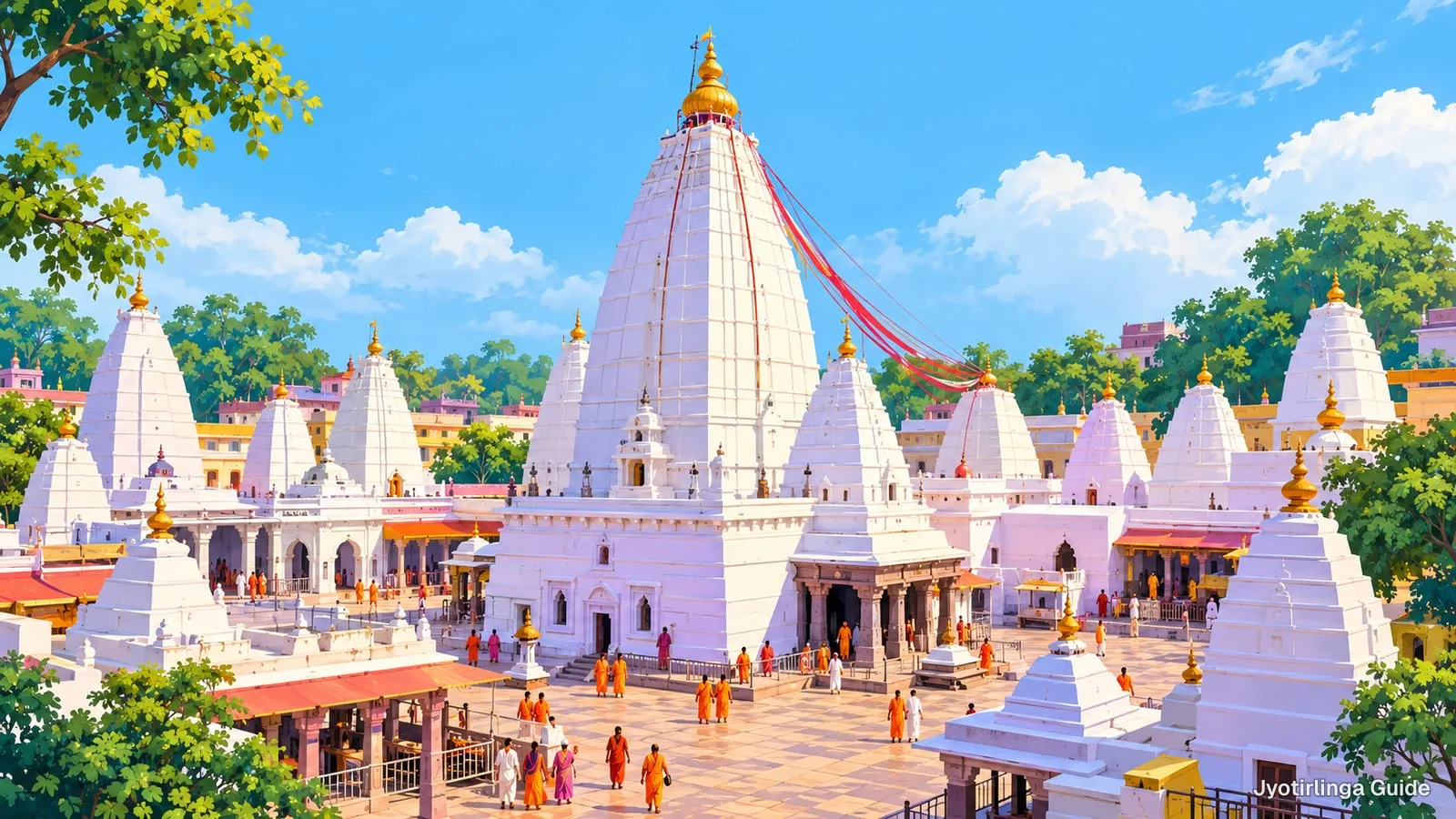
Timings and the day's rhythm
The temple trust publishes one daily schedule, and it runs in two sittings with a break in the middle of the day.
| Time | What happens |
|---|---|
| 4:00 AM | Doors open for darshan |
| 4:10 AM | Kancha jal, holy water offered to the deity |
| 4:00 PM | Doors close for the afternoon |
| 6:00 PM | Doors reopen for evening darshan |
| 6:10 PM | Shringar puja, when the deity is decorated with flowers, ornaments and traditional attire |
| 8:00 PM | Doors close after the evening rituals |
The schedule closes the doors at 8:00 PM, but the heading of the same timings page, the homepage and the site footer all say the temple is open daily from 4:00 AM to 9:00 PM. Treat 8:00 PM as the last time the schedule lists, and check again before a late visit.
The trust's schedule has a midday gap. Doors close at 4:00 PM and reopen at 6:00 PM. If you come in the afternoon, plan to wait for the evening sitting. The Shringar puja at 6:10 PM comes ten minutes after the doors reopen, so the evening sitting starts with that ceremony. The trust warns that timings change during the Shravani Mela in July and August and on Mahashivratri, when the temple stays open for longer.
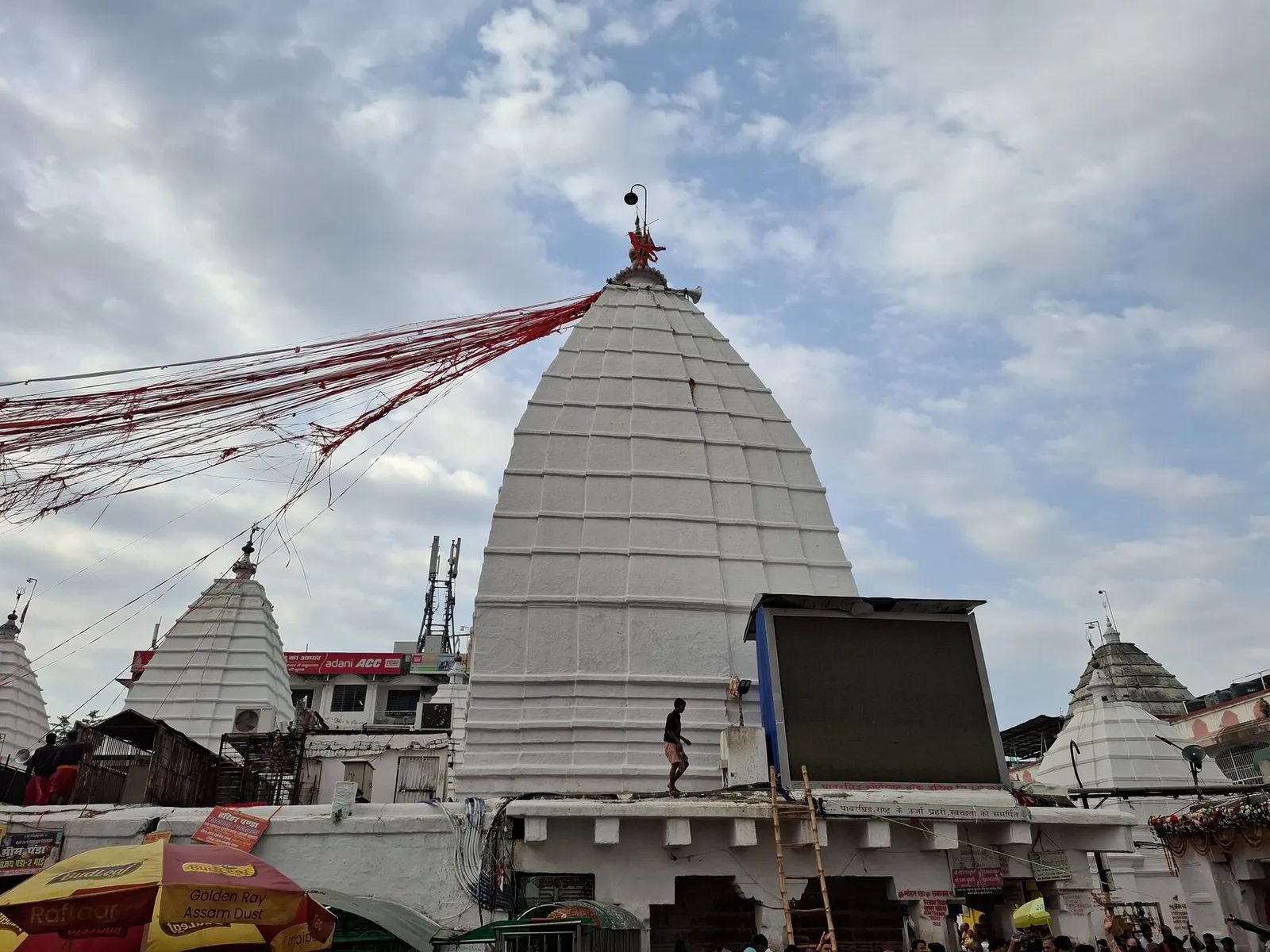

Getting there
The trust's visit page names three railway stations and one nearest airport, with Ranchi and Patna as other airports. The distances below are measured by road on Google Maps and OpenStreetMap, because the trust page gives two different figures for the station and the airport.
- By train: Baidyanath Dham station (BDME) is the closest station, about 1 km from the temple, but it is a branch station with local MEMU trains to Jasidih and Asansol. Deoghar Junction (DGHR) is about 3.5 km away. Jasidih Junction (JSME), 7 to 8 km by road, is where long-distance trains stop on the Howrah to Delhi line, and the trust calls it a station with excellent connectivity.
- By air: Deoghar airport (DGH) is the nearest airport. It is about 9 km by road. Direct flights connect Deoghar with Delhi, Kolkata, Mumbai and Patna. Taxis and auto-rickshaws are available at the airport.
- By road: Regular bus services run from Ranchi, Patna, Kolkata, Bhagalpur and Dumka. The trust gives Ranchi and Patna at about 280 km and Kolkata at about 370 km. NH-133 links Deoghar to the national highway network.
- By taxi: Taxis and cab services are available from nearby airports and railway stations, and ride-sharing apps also operate in Deoghar. The trust marks taxis as available 24x7 and says pre-paid taxi counters are at Jasidih station.
More routes and step-by-step options are on the how to reach Baidyanath page.
The darshan and the queue
The trust's pages do not describe the darshan queue or publish a queue time. Its about page says the main shrine is surrounded by 22 smaller temples dedicated to various deities, so allow extra time in the day if you want to see the other shrines too.
The trust's story page tells the legend. Ravana, the demon king of Lanka, performed penance in the Himalayas and offered his ten heads to Lord Shiva. Shiva granted him the Atmalinga to carry to Lanka, on the condition that it must not touch the ground before he arrived. On the way, Ravana gave the linga to a boy to hold while he performed his daily rituals. The boy, who was Lord Ganesha in disguise, set it down, and the linga became fixed at that spot. The trust says that Shiva healed Ravana's wounds as the divine physician, which is why the deity is called Baidyanath, the Lord of Physicians.
The trust's about page adds that the linga is also called Kamana Linga, because the wishes of sincere devotees are believed to be fulfilled here.
The trust's about page says the main shrine is surrounded by 22 smaller temples dedicated to various deities, including Lord Ganesha and Maa Parvati. The trust describes the temple as classic Nagara style with a pyramidal shikhara above the sanctum. It also says the present structure dates back to the medieval period, and that the site has been a pilgrimage place for over a millennium.
Inside the complex is the Jai Durga Shakti Peetha, which the trust calls the Hridaya Peetha. It is dedicated to Goddess Jaya Durga, and the trust says pilgrims traditionally visit it along with the Jyotirlinga.

Festivals and busy seasons
The trust's festivals page lists the main dates. Each one brings more people, and the trust's notes on timings say the temple may keep longer hours on some of them.
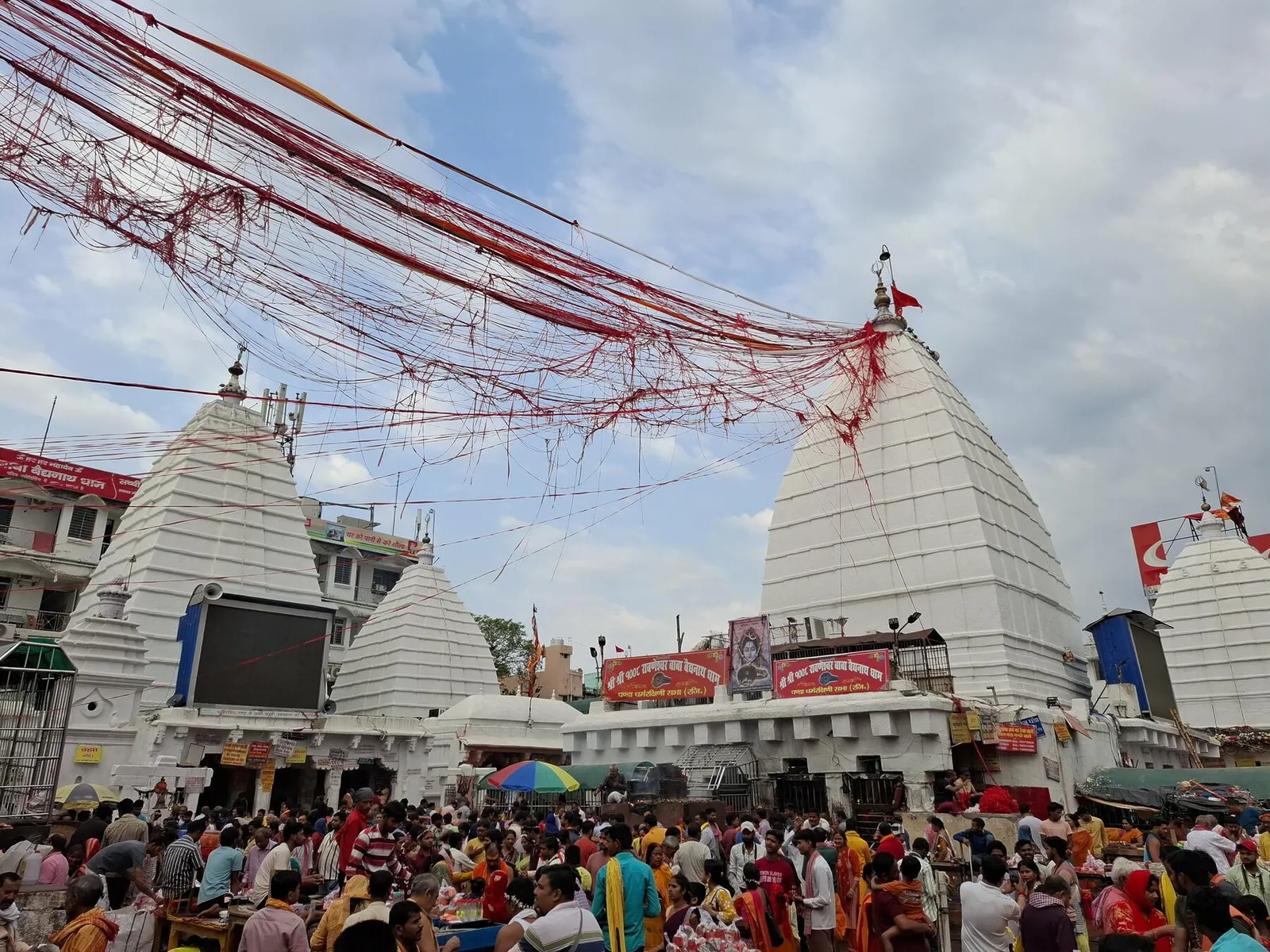
The Shravani Mela in July and August is the largest. The trust describes it as one of India's largest and most sacred pilgrimages. Kanwariyas carry holy Ganga water on a 105 km walk from Sultanganj to offer at the Jyotirlinga.
Mahashivratri in February and March has all-night vigils, special pujas and grand aartis at the Jyotirlinga. The trust's timings note says the temple stays open for extended hours on this day.
Basant Panchami, in January and February, opens Shiva's wedding festivities with the Tilkotsav. Devotees, many from the Mithila region, bring decorated kanwars for jalabhishek and offer tilak.
The trust's festivals page also lists Kartik Purnima in November, with lamp lighting and ritual baths in Shivganga, and Nag Panchami in July and August. It describes the Pradosh Vrat as a fast observed every fortnight on the 13th day of the lunar month. For Mahashivratri in more detail, see the Mahashivratri festival page.
Nearby places
The Deoghar district lists a few places near the temple.
- Naulakha Temple: a short drive south of Baba Baidyanath Temple.
- Trikut Pahar: the district calls it one of the most exciting tourist destinations in Deoghar, with trekking, a ropeway and wildlife.
- Nandan Pahar: a small hill on the edge of the town with a famous Nandi temple.
- Satsang Ashram: south-west of Deoghar, a holy place for devotees of Thakur Anukulchandra, which the district lists under religious places.
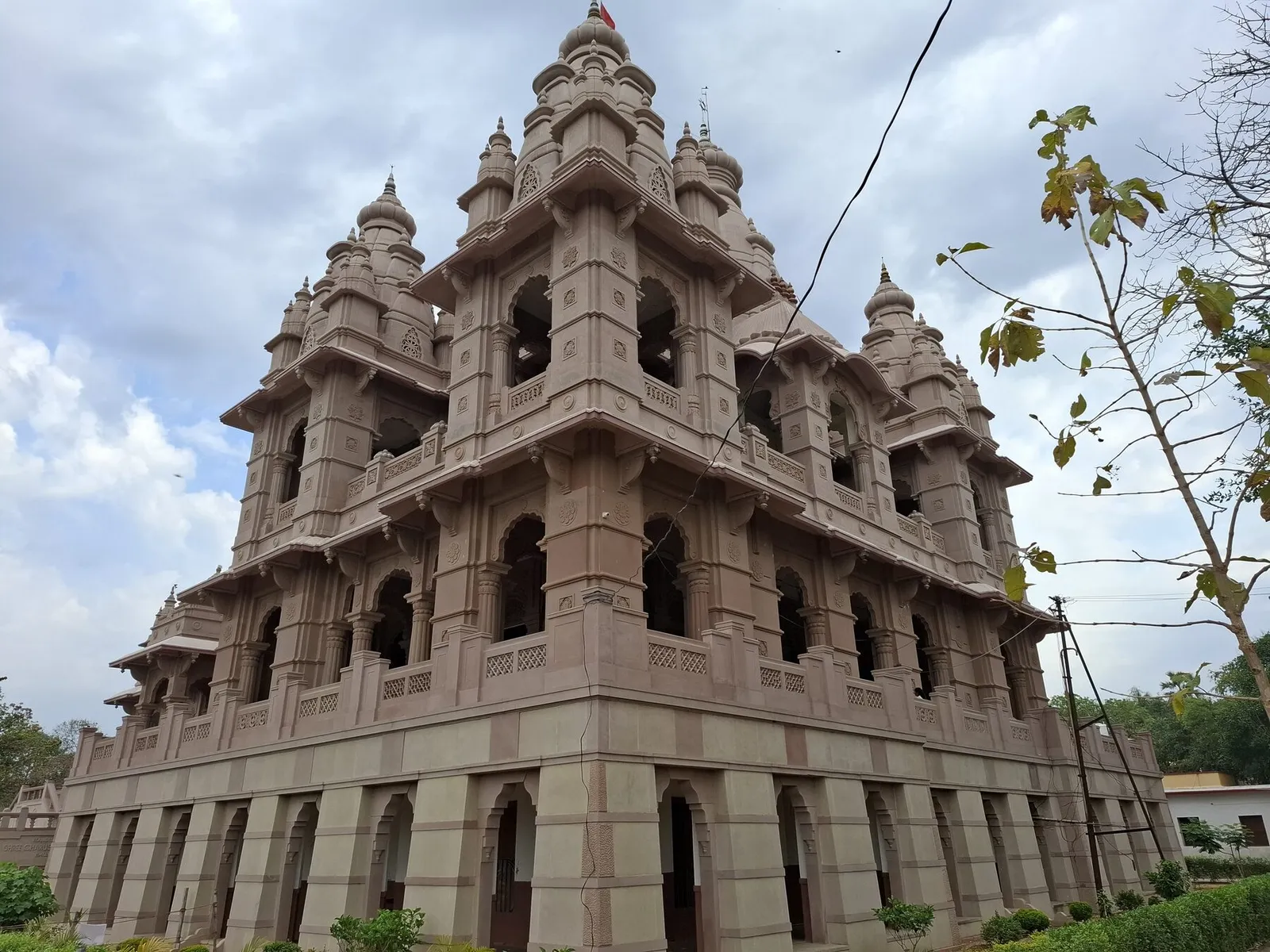

More is on the nearby places page.
Planning the visit
- Where to stay: this site's temple record lists dharamshalas and town hotels. The trust pages read for this guide do not list stays. See the hotels page for options.
- Route ideas: if you are visiting more than one Jyotirlinga, the circuit page shows how Baidyanath fits with the others.
- Timing the trip: the trust calls the Shravani Mela the largest pilgrimage event, and timings change then and on Mahashivratri. Check the trust's news section for festival schedule updates.