
Baidyanath Jyotirlinga, Deoghar
- Stotram list
- No. 9
- Season
- Jul to Aug (Shravan)
- Railhead
- Baidyanath Dham
- about 1 km
- Airport
- Deoghar (DGH)
- about 9 km
Official website: Baba Dham shrine website (babadham.org)
The emblem here is our own drawing. The site’s terms bar reproducing its logos without written permission.
The map loads when it scrolls into view.
The story of Baidyanath
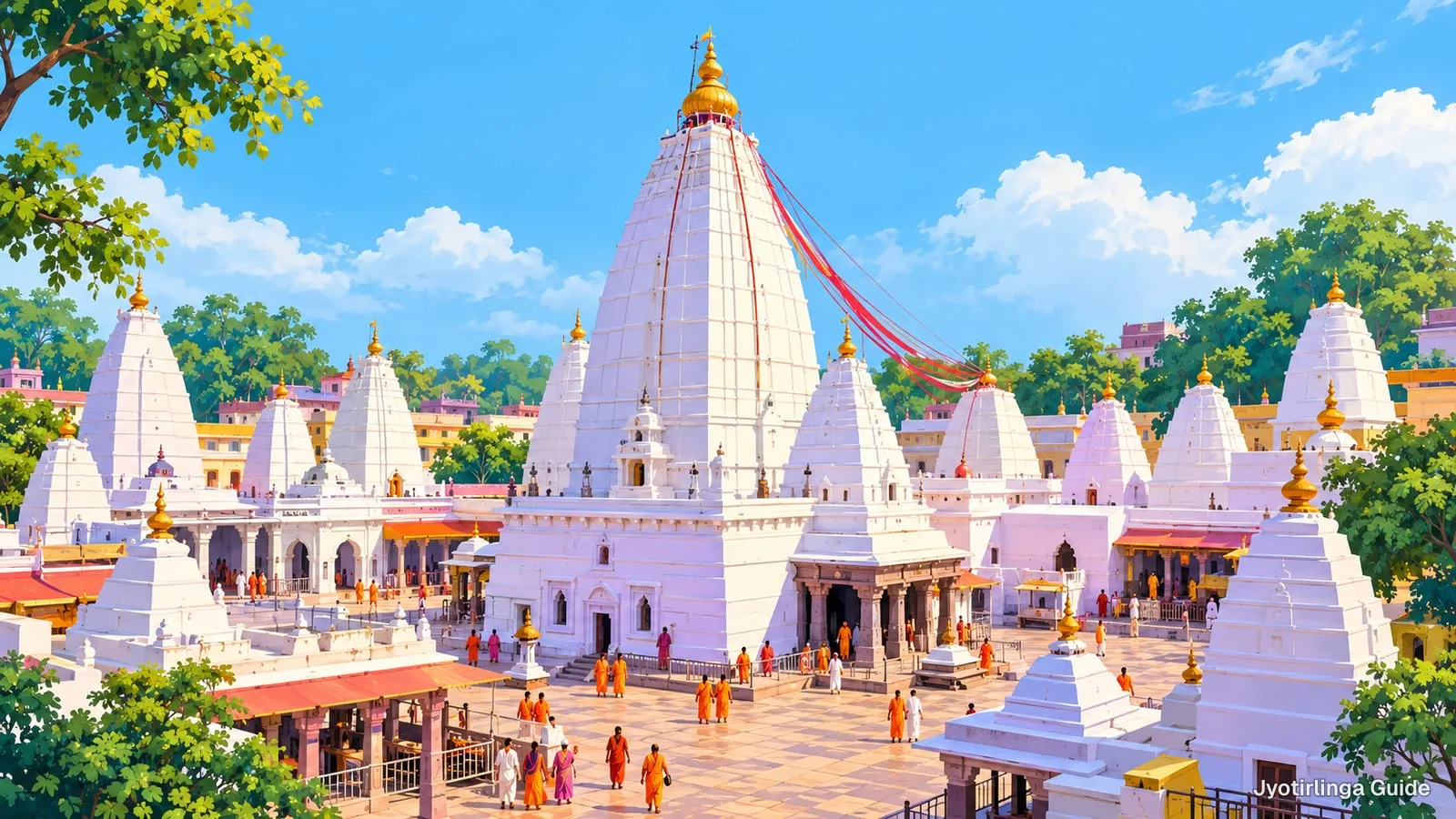
At Deoghar in Jharkhand, Baidyanath Dham, also called Kamana Linga, the linga of wishes. The trust places it as a pilgrimage site for over a millennium, with the present structure medieval and 22 smaller temples around the main shrine.
The temple site gives the legend: Ravana offered his ten heads to Shiva as a sacrifice, and Shiva, pleased, granted him the Atmalinga to carry to Lanka on the condition that it must never touch the ground. On the way Ravana handed it to a boy, who was Ganesha in disguise, and the boy set it down, fixing it where Deoghar now stands.
The trust derives the name from Vaidya, a physician, because Shiva is held to have healed Ravana here, and calls the linga Kamana Linga because the wishes of sincere devotees are held to be fulfilled at it.
- Trust legend page, temple trust
- Trust about the temple page, temple trust
Darshan at Baidyanath
Baidyanath is an active temple with a daily ritual schedule, not a monument. The free queue is the default: it costs nothing and on a normal weekday it moves well. Paid darshan, if the trust offers one, buys a shorter line rather than a different view of the linga. On festival days the paid line is often suspended entirely.
Aarti is the part worth planning around. Slots are limited, some are booked days ahead, and walk-ins are turned away once the hall is full.
The temple opens at 4:00 AM, closes for the middle of the day, and reopens for an evening session.
Source: babadham.org.
The general queue is free; a paid Shighra Darshanam pass buys a faster line for a time slot. The trust publishes no waiting times, and visitor reports vary from under an hour in the free queue on an ordinary morning to much longer on Mondays and weekends.
Shravani Mela in July and August is the largest event, with Monday queues running for kilometres; Mahashivratri and Basant Panchami are the other peaks.
- Trust about the temple page, temple trust
- Trust festivals page, temple trust
- Prabhat Khabar, Shighra Darshanam pass, news report
- Wanderlog visitor reviews, queue times, visitor reports
When the crowds arrive
The Tilkotsav opens Shiva's wedding festivities, and devotees, many from Mithila, arrive carrying decorated kanwars to do jalabhishek and offer the tilak.
All-night vigil, special pujas and grand aartis at the jyotirlinga, per the trust festival page.
The heaviest month of the year. Kanwariyas walk about 105 km from Sultanganj with Ganga water; touching the linga is stopped and water is offered through the argha, phones and bags are kept out, and the doors open at about 4 AM. News reports put Monday crowds at 2 to 4 lakh, with queues several kilometres long, and over 50 lakh across the month.
- Trust festivals page, temple trust
- Trust festivals page, temple trust
- Prabhat Khabar, Sawan 2026 darshan guideline, news report
- Prabhat Khabar, sparsh puja closed 30 July to 28 August, news report
- Organiser, first Shravan Monday, news report
- ETV Bharat, second Shravan Monday, news report
- DD News, final Shravan Monday, news report
- Trust festivals page, temple trust
Where to stay
Three ways people stay at Baidyanath, cheapest and closest first.
What is around Baidyanath
Shravan brings the largest crowds of the year. Most visitors give the temple a few hours and leave the same day, which is a miss: the places worth half a day sit within a short drive, and going early or late avoids the crowd that arrives with the coaches.
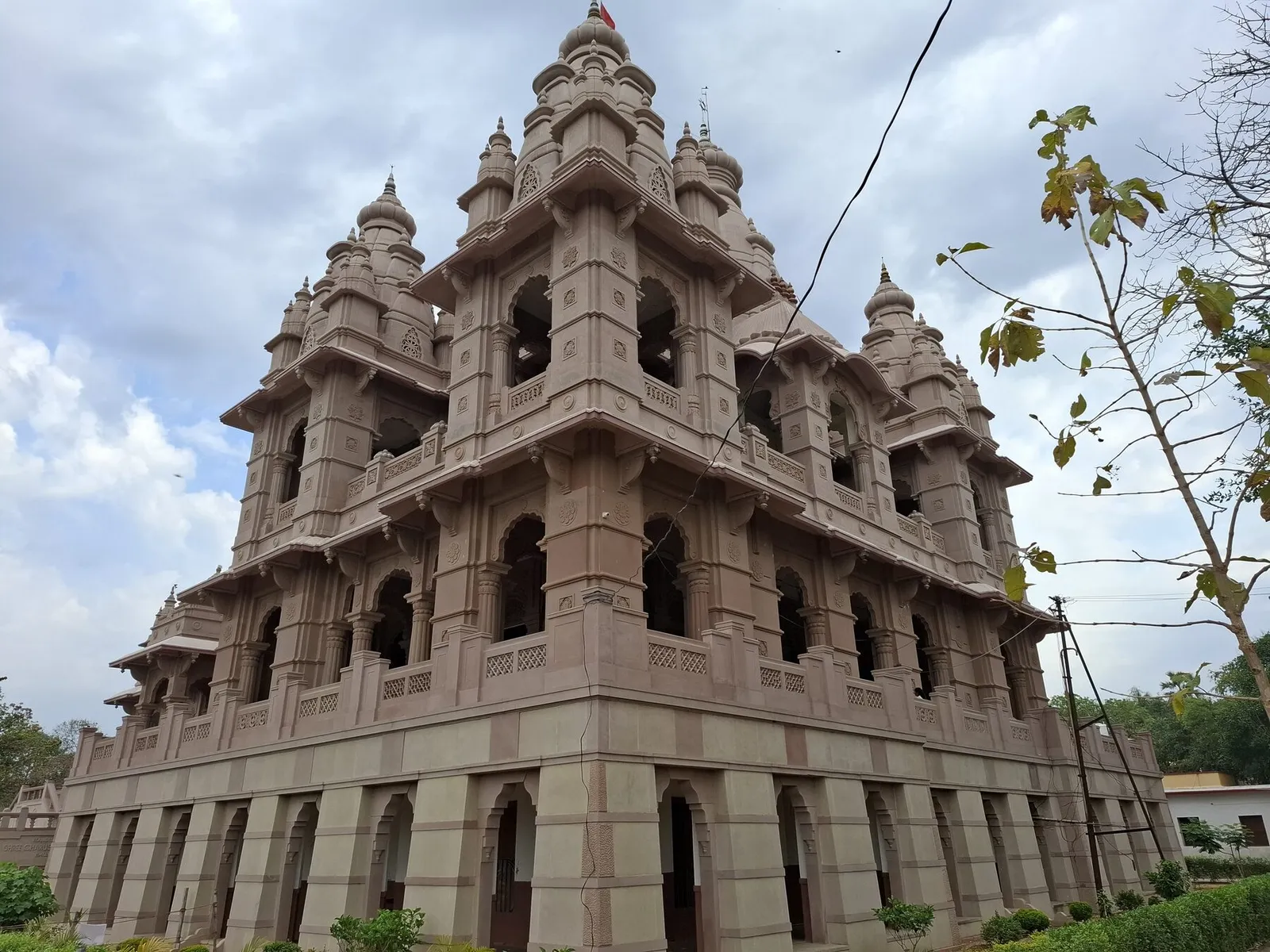
- The 22 temples in the complex
- Satsang Ashram
- Basukinath, 43 km
- Naulakha Temple
- Trikut Pahar

Rules and practicalities
Phones must be switched off or left in the locker area before the sanctum; lockers are free. No photos inside the main sanctum; photos are allowed in the outer complex. News reports from July 2026 say the temple committee has now banned phones inside the temple, and that phones, bags and other belongings are not allowed in during Shravani Mela.
Modest, traditional clothing. Men are encouraged to remove upper garments before the sanctum. Shorts and revealing clothes are not allowed.
The temple site says wheelchairs are free at the temple office, first come first served, with ID, and that a help desk at the entrance (6 AM to 9 PM) handles lost and found, lockers and wheelchairs.
Baidyanath on Mahashivratri and during Shravan runs on a different schedule with far longer queues. See the festival pages for what changes.
- Carry photo ID. News reports describe a metal-detector check at entry and advise against large bags.
- A paid fast-track pass, Shighra Darshanam, runs beside the free queue, sold online and at counters for a time slot. No temple page we read gives the fee, so confirm it at the counter.
- During Shravani Mela (30 July to 28 August in 2026) touching the linga is stopped: water is offered through the main or outer argha instead.
- The temple lists no rooms of its own. Its FAQ points to the several dharamshalas, guest houses and hotels in Deoghar near the temple, booked directly with each. Where to stay.
- Google Maps, Jasidih, BDME, Deoghar Jn and the airport to the temple, map route
- Google Maps, Baidyanathdham station trains, map route
- Temple site FAQ, wheelchairs and lockers, temple trust
- Temple site timings, temple trust
- Free Press Journal, phone ban, news report
- Prabhat Khabar, ID, metal detector and pass, news report
- Explurger, footwear and shoe-keeping, visitor reports
- Temple site visit page, Jasidih taxi counters, temple trust
Sources for this temple: babadham.org, freepressjournal.in, google.com, google.com, enquiry.indianrail.gov.in, babadham.org, babadham.org, babadham.org. What each one covers, and the date it was read, is on the darshan and booking page.
Common questions about Baidyanath
What are the Baidyanath temple timings?
How do I reach Baidyanath?
Where should I stay near Baidyanath?
When is the best time to visit Baidyanath?
Also in the East group
Baidyanath is the only temple in the East group.
The East group: stations, airports and links to the other groups →