
Omkareshwar Jyotirlinga, Khandwa (Mandhata island)
- Stotram list
- No. 4
- Season
- Oct to Mar
- Railhead
- Khandwa Jn
- about 70 km
- Airport
- Indore
- about 84 km
Official website: Shri Omkareshwar Mandir Trust (shriomkareshwar.org)
The emblem here is our own drawing. The trust uses no image logo, and its copyright policy bars showing its material on other websites.
The map loads when it scrolls into view.
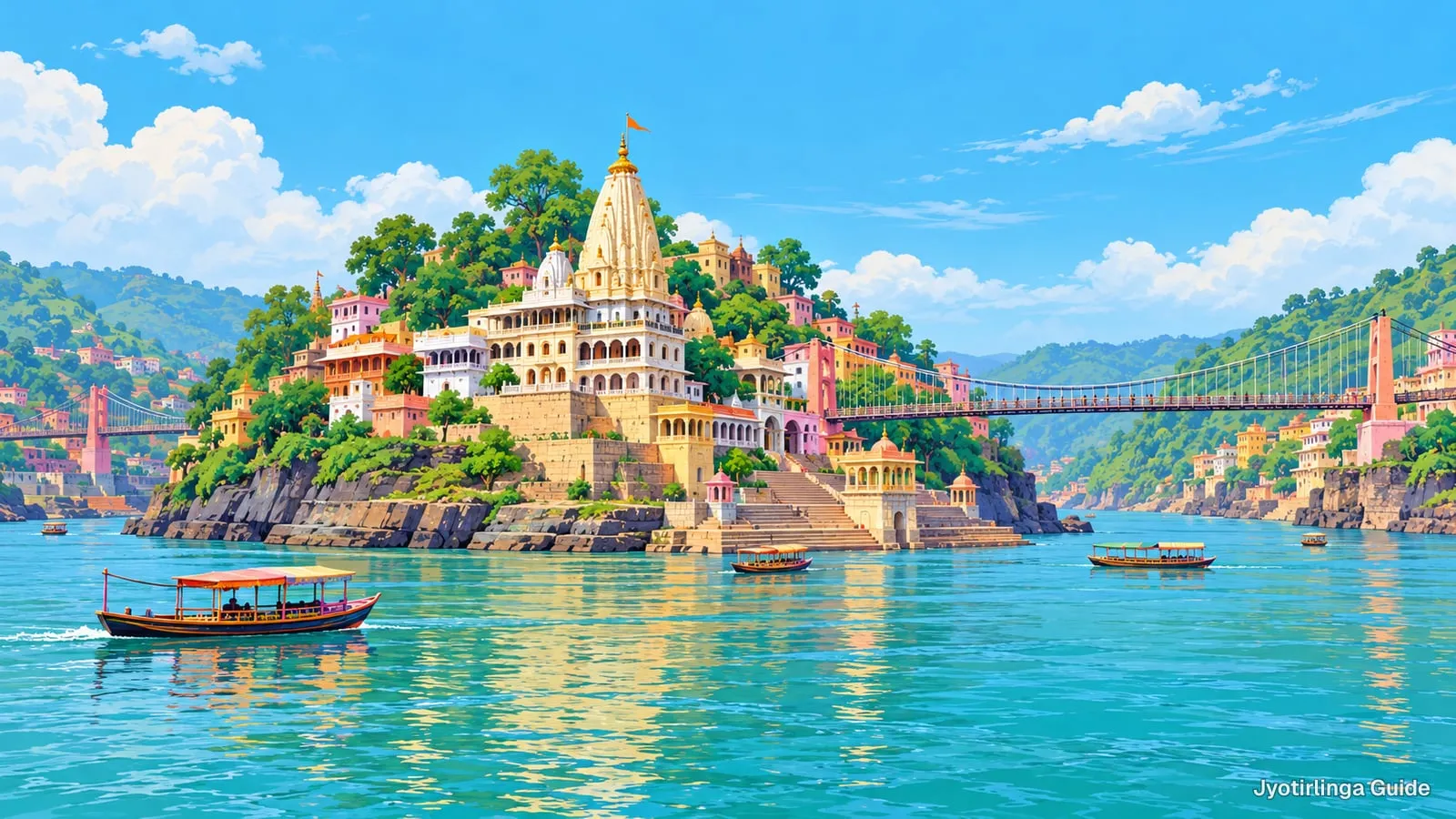
The story of Omkareshwar
On the Narmada in Madhya Pradesh, where the river splits around Mandhata island, about 4 km long and 2 km wide, also called Shivpuri.
The trust account has the Vindhya mountain performing penance and worshipping Shiva as a physical lingam, and Shiva appearing and blessing it as the Pranav Lingam. In one version the lingam then divides in two, one half becoming Omkareshwar and the other Mamleshwar, also called Amreshwar. In another version King Mandhata of the Ikshvaku dynasty meditated here and was blessed.
The jyotirlinga stands at Omkareshwar and the physical lingam at Mamleshwar across the water, which is why the two are done as a pair on the same visit.
- Trust main temple page, temple trust
Darshan at Omkareshwar
Omkareshwar is an active temple with a daily ritual schedule, not a monument. The free queue is the default: it costs nothing and on a normal weekday it moves well. Paid darshan, if the trust offers one, buys a shorter line rather than a different view of the linga. On festival days the paid line is often suspended entirely.
Aarti is the part worth planning around. Slots are limited, some are booked days ahead, and walk-ins are turned away once the hall is full.
The temple day runs from the 4:30 AM Mangal aarti to the Shayan darshan that ends at 10:30 PM.
Source: shriomkareshwar.org.
Free darshan runs through the day except during the aartis and the evening shringar, and the trust sells Shighra Darshan for a shorter line. The full clock is on this site's darshan page for Omkareshwar.
The trust keeps its own festival page, and Mahashivratri and the Shravan Mondays are the days the island fills.
- Trust FAQ, darshan and booking, temple trust
- Trust festivals page, temple trust
When the crowds arrive
The heaviest stretch of the year. In 2026 the district ran a one-way darshan route, stopped outside vehicles entering the town, sent cars to set parking lots and moved the Shighra Darshan counter to Brahmapuri parking. Each Monday the Somvar Sawari procession leaves at 4 PM, and the queue builds from dawn after the Narmada bath.
Visitor guides agree these are the peak days, with the general queue running to hours instead of the 30 to 40 minutes of a quiet morning. The trust says its standard rules may not apply at Shivratri, Shravan, fairs and festivals, so check its site before you go.
- Amar Ujala, Shravan route, parking and vehicle limits, news report
- Webdunia, the one-way route and shoe stands, news report
- Amar Ujala, first Shravan Monday, news report
- Trust rules, festival days, temple trust
- Chikucab, queue times and peak days, visitor reports
- Temple Timings, peak days, visitor reports
Where to stay
Three ways people stay at Omkareshwar, cheapest and closest first.
What is around Omkareshwar
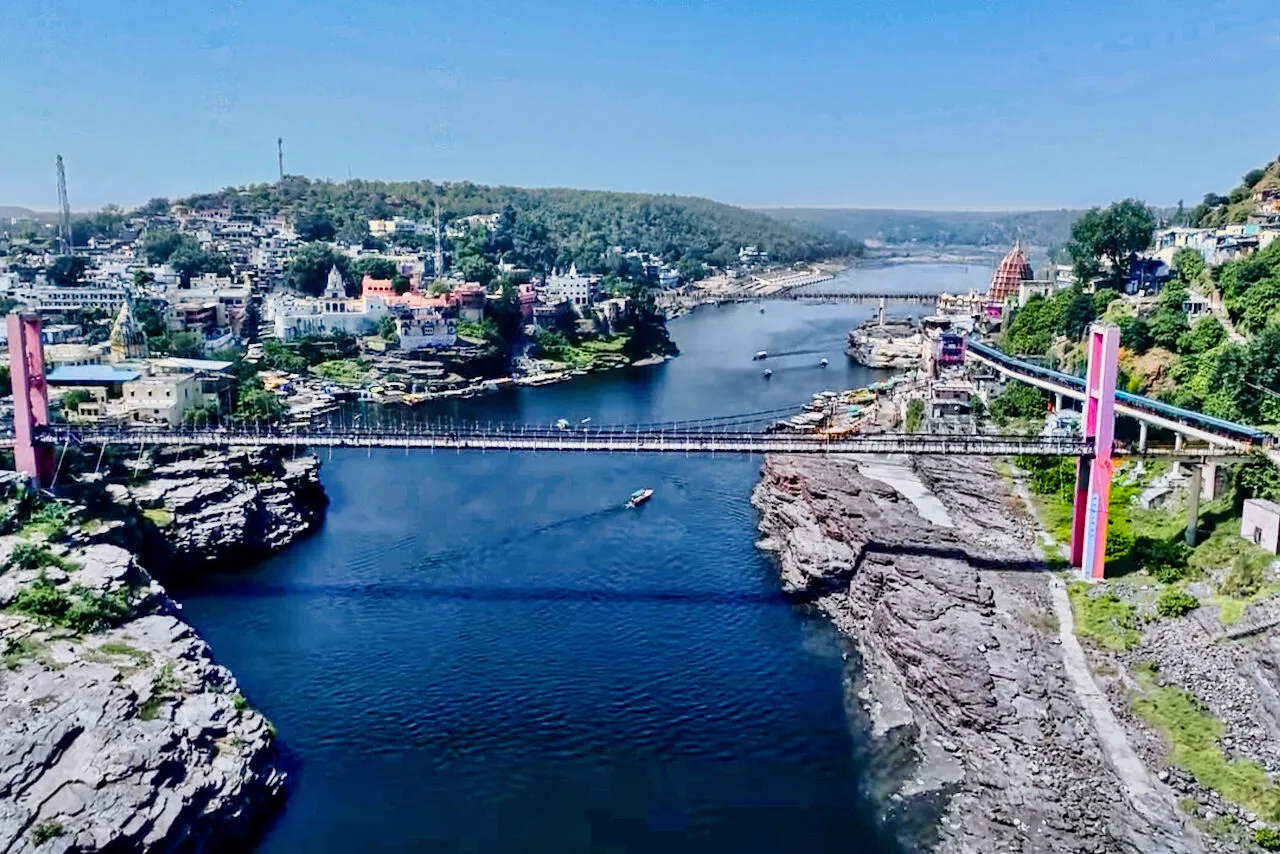
Bridge and boats both reach the island. Most visitors give the temple a few hours and leave the same day, which is a miss: the places worth half a day sit within a short drive, and going early or late avoids the crowd that arrives with the coaches.
- Mamleshwar (Amreshwar)
- Annapurna Temple
- Gurudwara
- The island and the Narmada ghats
Rules and practicalities
The trust's rules list no phone or camera ban, and the 2026 news reports on the darshan routes mention none. A 2026 visitor guide says to carry little more than ID, phone and water across the bridge, since bags slow the security check. Ask the guard before taking photos.
The trust states there is no official dress code and advises regular, modest attire for darshan.
The trust lends wheelchairs free for up to 2 hours from the Yatri Suvidha Kendra near the Jhula Pul, with a helper if one is free. Expect a wait at peak times.
Omkareshwar on Mahashivratri and during Shravan runs on a different schedule with far longer queues. See the festival pages for what changes.
- Touching the Shivling is not allowed. Only darshan and water offering are allowed in the sanctum; abhishek is done by the priests at set places.
- The trust warns that offerings such as bilva leaves, flowers and coconuts are sometimes not allowed into the sanctum.
- Shighra Darshan is sold only until 8:00 PM. Bring the printed ticket and a photo ID; children under 12 go free with their parents.
- Omkar Prasadalaya serves meals from 10:00 AM to 3:00 PM and khichdi from 5:00 PM to 9:00 PM.
- The trust's only accommodation is Shri Ji Vishramalaya, a community hall with 20 beds and floor bedding for more, separate washrooms, and priority for families, women, children and the elderly. It is booked online for a nominal fee. For private rooms the trust points to Bhakt Niwas and Hotel Temple View. Where to stay.
- OpenStreetMap route, Indore airport to the temple, map route
- OpenStreetMap route, Khandwa Jn to the temple, map route
- OpenStreetMap route, Mamleshwar to Omkareshwar on foot, map route
- Trust how to reach page, Sanawad and Khandwa, temple trust
- Trust bridges page, temple trust
- Trust wheelchair service, temple trust
- Trust ghats page, temple trust
- Trust FAQ, Somvar Sawari, temple trust
- Trust rules, sanctum and ticket hours, temple trust
- Free Press Journal, last train at Omkareshwar Road, news report
- ETV Bharat, Jhula Pul shut for repair, news report
- ETV Bharat, entry over the old bridge, news report
- Amar Ujala, parking, shoe stands and darshan flow, news report
- Chikucab, boats, bags and the Indore day trip, visitor reports
- Temple Timings, bridge and boats, visitor reports
Sources for this temple: shriomkareshwar.org, enquiry.indianrail.gov.in, freepressjournal.in, openstreetmap.org, shriomkareshwar.org, shriomkareshwar.org, shriomkareshwar.org. What each one covers, and the date it was read, is on the darshan and booking page.
Common questions about Omkareshwar
What are the Omkareshwar temple timings?
How do I reach Omkareshwar?
Where should I stay near Omkareshwar?
When is the best time to visit Omkareshwar?
Also in the Central group
The other temples in the Central group, malwa and the narmada valley.
The Central group: stations, airports and links to the other groups →
