
Kashi Vishwanath Jyotirlinga, Varanasi
- Stotram list
- No. 7
- Season
- Oct to Mar
- Railhead
- Varanasi Jn
- about 5.5 km
- Airport
- Varanasi
- about 25 km
Official website: Shri Kashi Vishwanath Temple Trust (shrikashivishwanath.org)
The emblem here is our own drawing. The logo belongs to the trust, so we leave it on their site and keep this independent guide from being mistaken for it.
The map loads when it scrolls into view.
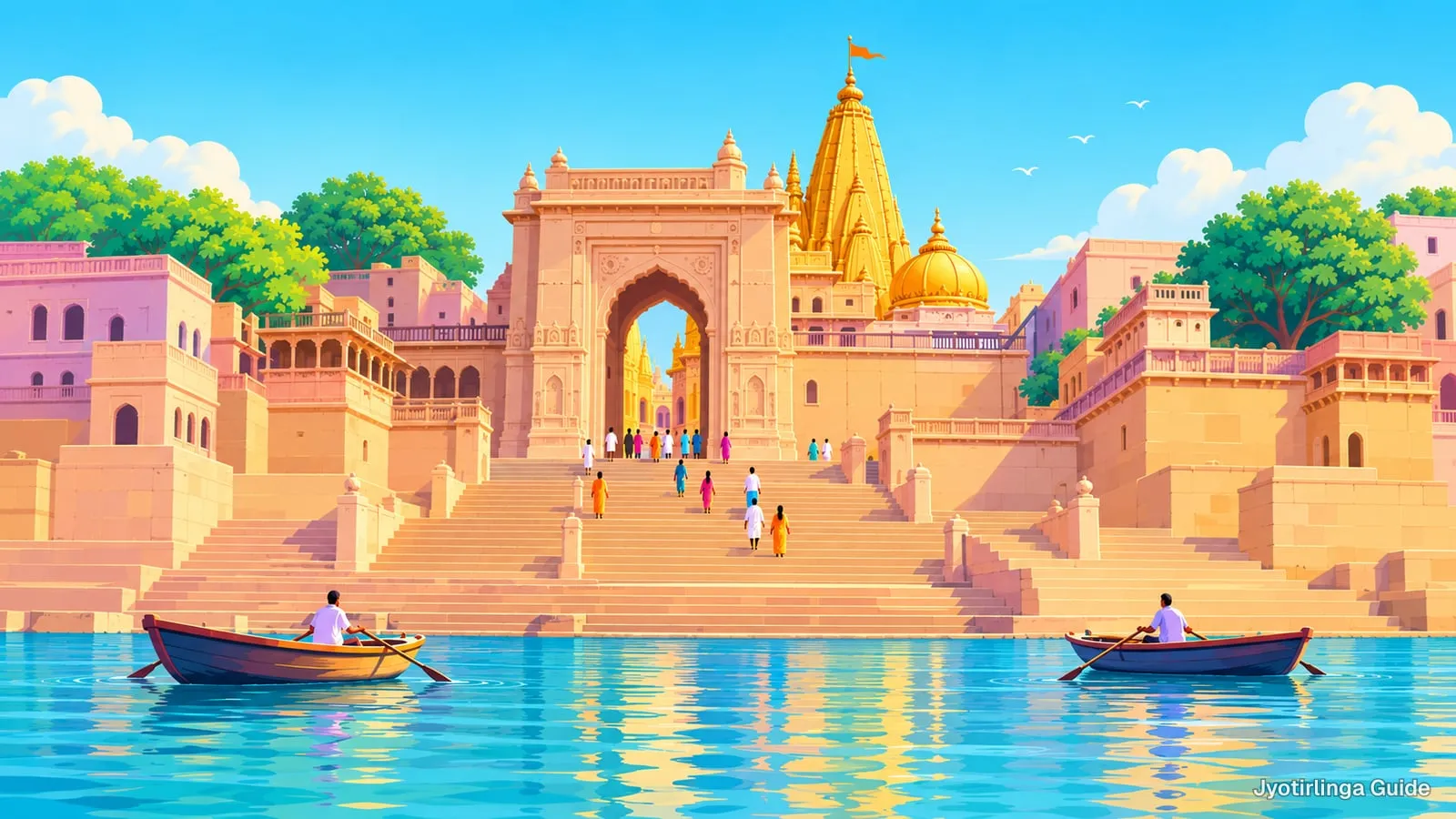
The story of Kashi Vishwanath
In Varanasi on the Ganga, the Vishweshwara jyotirlinga and the temple that holds the city's devotional focus.
The Varanasi district page reads the city as the point where the first jyotirlinga, the fiery pillar of light, broke through the earth and rose towards the sky.
The temple's own site records the tradition that the merit earned by the darshan of the other jyotirlingas accrues from a single visit here, and names the saints who have come: Adi Shankaracharya, Ramakrishna Paramhansa, Swami Vivekananda, Tulsidas, Dayanand Saraswati and Guru Nanak.
- Temple site, mythology page, temple trust
- Varanasi district, temples of importance, district administration
Darshan at Kashi Vishwanath
Kashi Vishwanath is an active temple with a daily ritual schedule, not a monument. The free queue is the default: it costs nothing and on a normal weekday it moves well. Paid darshan, if the trust offers one, buys a shorter line rather than a different view of the linga. On festival days the paid line is often suspended entirely.
Aarti is the part worth planning around. Slots are limited, some are booked days ahead, and walk-ins are turned away once the hall is full.
The temple opens at 2:30 AM and closes at 11:00 PM, and darshan runs in the gaps between the five aartis.
Source: shrikashivishwanath.org.
The temple opens early for the Mangala aarti and runs the day in darshan windows with the aartis in between. The corridor has widened the approach, but the queue inside the sanctum area is the part that takes the time.
Shravan, Mahashivratri and the Kashi festival calendar are the heavy periods, and the temple posts changes to its own darshan windows at those times.
- Temple site, darshan windows, temple trust
When the crowds arrive
Online darshan and puja bookings were suspended for the two days of Mahashivratri 2026, and the queue ran through barricades end to end. The trust CEO expected eight to ten lakh visitors in 2026; an official count for 2025 was over 11 lakh.
Each Shravan Monday the deity gets a different shringar, and the crowd starts queuing the night before. In 2025 protocol darshan was stopped for the whole month, the free baggage counters were shut, and bags, phones and pens had to stay at the hotel. Entry from Lalita Ghat can close when the river rises.
Winter holidays bring some of the heaviest days of the year. For New Year 2026 the trust stopped VIP, protocol and touch darshan, leaving only darshan from a distance, and news reports put the daily count at 2 to 2.5 lakh in early January.
The trust lists these as its major festivals, on top of Mahashivratri. Expect a longer queue and changed aarti times on those days.
- Amar Ujala, bookings suspended for Mahashivratri 2026, news report
- NewsMill, trust CEO on the 2026 crowd, news report
- ETV Bharat, 2025 count, news report
- The Week, Shravan 2025 arrangements, news report
- IANS, first Shravan Monday 2025, news report
- Prabhat Khabar, Shravan 2026 shringar schedule, news report
- Aaj Tak, New Year darshan limits, news report
- Amar Ujala, daily count in January 2026, news report
- Trust FAQ, major festivals, temple trust
Where to stay
Three ways people stay at Kashi Vishwanath, cheapest and closest first.
What is around Kashi Vishwanath
The corridor links the temple to the Ganga. Most visitors give the temple a few hours and leave the same day, which is a miss: the places worth half a day sit within a short drive, and going early or late avoids the crowd that arrives with the coaches.
- Maa Annapurna Temple
- Sankatha Temple
- Kaal Bhairav Temple
- The ghats
Rules and practicalities
Mobile phones, smart watches, electronic keys, cameras and other recording devices are not allowed in the temple premises, and the trust FAQ adds pens and other gadgets. The trust runs free lockers, but says they are limited, so leave the phone and bags at the hotel if you can.
The trust says there is no dress code for darshan, and asks devotees to wear decent clothes.
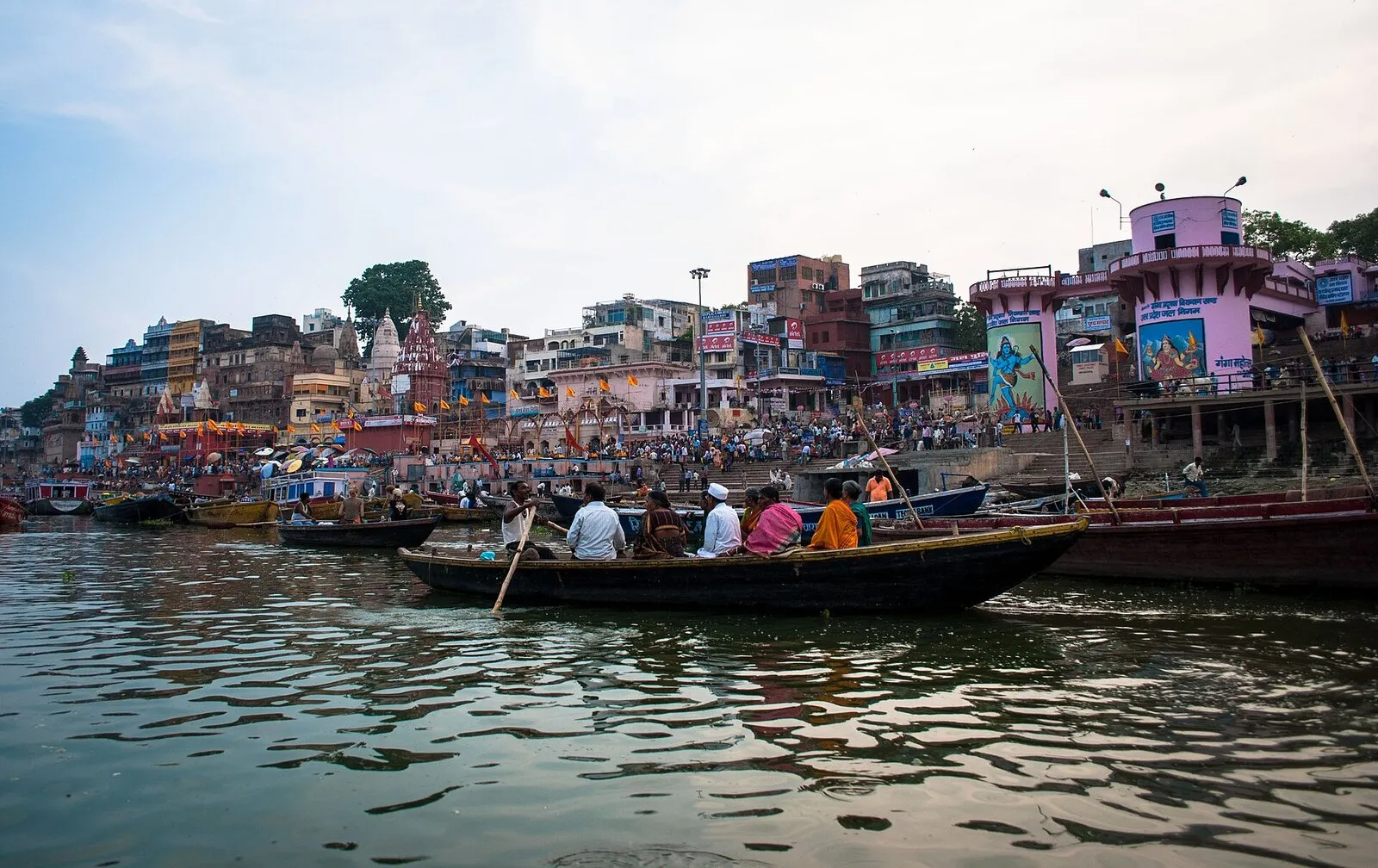
Most visitors walk in from Godowlia, and Gate 4 is the main entrance from the town side. From the river, the corridor climbs from Lalita Ghat to Gate 1, the Ganga Dwar, open 6:00 AM to 9:00 PM and shut when the Ganga runs high. Shoes come off at stands outside, then phones and bags go into the free lockers, which the trust says are limited, and the queue passes a security check. Inside, the corridor and courtyards are paved; the darshan at the sanctum lasts a few seconds. E-carts carry disabled devotees through the no vehicle zone.
Kashi Vishwanath on Mahashivratri and during Shravan runs on a different schedule with far longer queues. See the festival pages for what changes.
- Godowlia to Maidagin is a no vehicle zone. The trust runs e-carts for disabled devotees.
- Entry from the river is through Gate 1, the Ganga Dwar, from 6:00 AM to 9:00 PM, and the trust closes it when the Ganga runs high.
- For the Mangala aarti, report at Gate 1 by 2:30 AM with the ticket. The other aartis can be entered from any gate.
- Entry is free. Sugam Darshan takes you to the sanctum with a shastri, without the queue, and includes a box of prasad and a locker.
- Help desks sit near Gate 4, at Shankaracharya Chowk, Saraswati Fatak, in the temple courtyard and at Bhairav Ghat.
- The trust has two guest houses: Ganga Darshanam near Dashashwamedh Ghat, booked on gangadarshanam.com, and Southern Grand Kashi (Bhimashankar Guest House) inside the corridor, booked on southerngrandkashi.com, with super deluxe rooms and dormitory beds. Neither site prints a tariff, so the price shows only when you search your dates. Where to stay.
- OpenStreetMap route, Varanasi Jn to Godowlia, map route
- OpenStreetMap route, Godowlia to the temple on foot, map route
- Trust notices, no vehicle zone, gadgets, lockers, Ganga Dwar, temple trust
- Trust FAQ, gates, lockers, aarti reporting, temple trust
- Trust help desk locations, temple trust
- Triveni Cabs, drop at Godowlia, shoes and lockers, visitor reports
- Namaste India Trip, drop points and quiet hours, visitor reports
- The Week, Gate 4 and the entry routes, news report
Sources for this temple: shrikashivishwanath.org, utsav.gov.in, enquiry.indianrail.gov.in, shrikashivishwanath.org, shrikashivishwanath.org, shrikashivishwanath.org, shrikashivishwanath.org. What each one covers, and the date it was read, is on the darshan and booking page.
Common questions about Kashi Vishwanath
What are the Kashi Vishwanath temple timings?
How do I reach Kashi Vishwanath?
Where should I stay near Kashi Vishwanath?
When is the best time to visit Kashi Vishwanath?
Also in the North group
The other temples in the North group, the himalaya and the ganga plain.
The North group: stations, airports and links to the other groups →
