
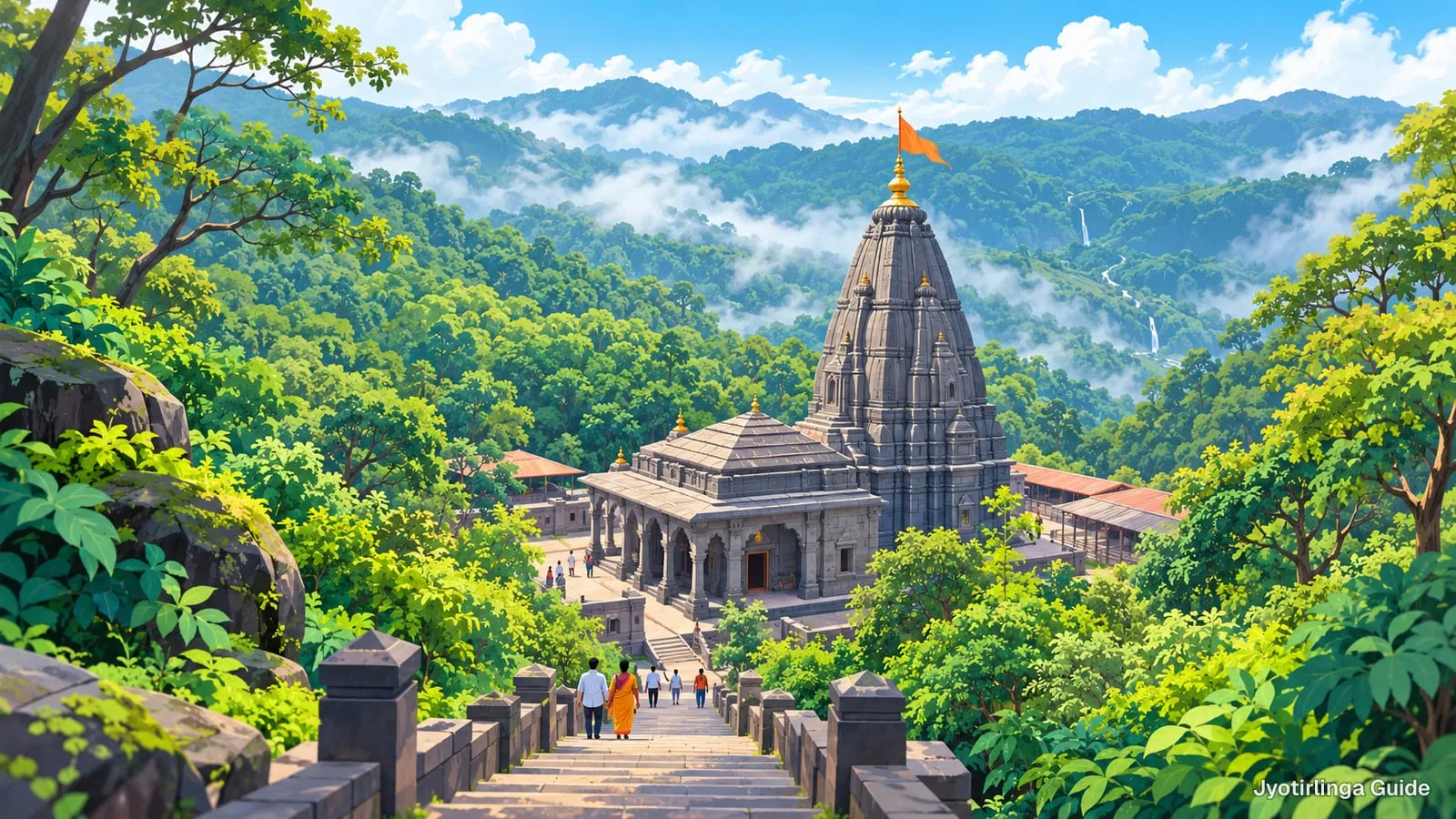
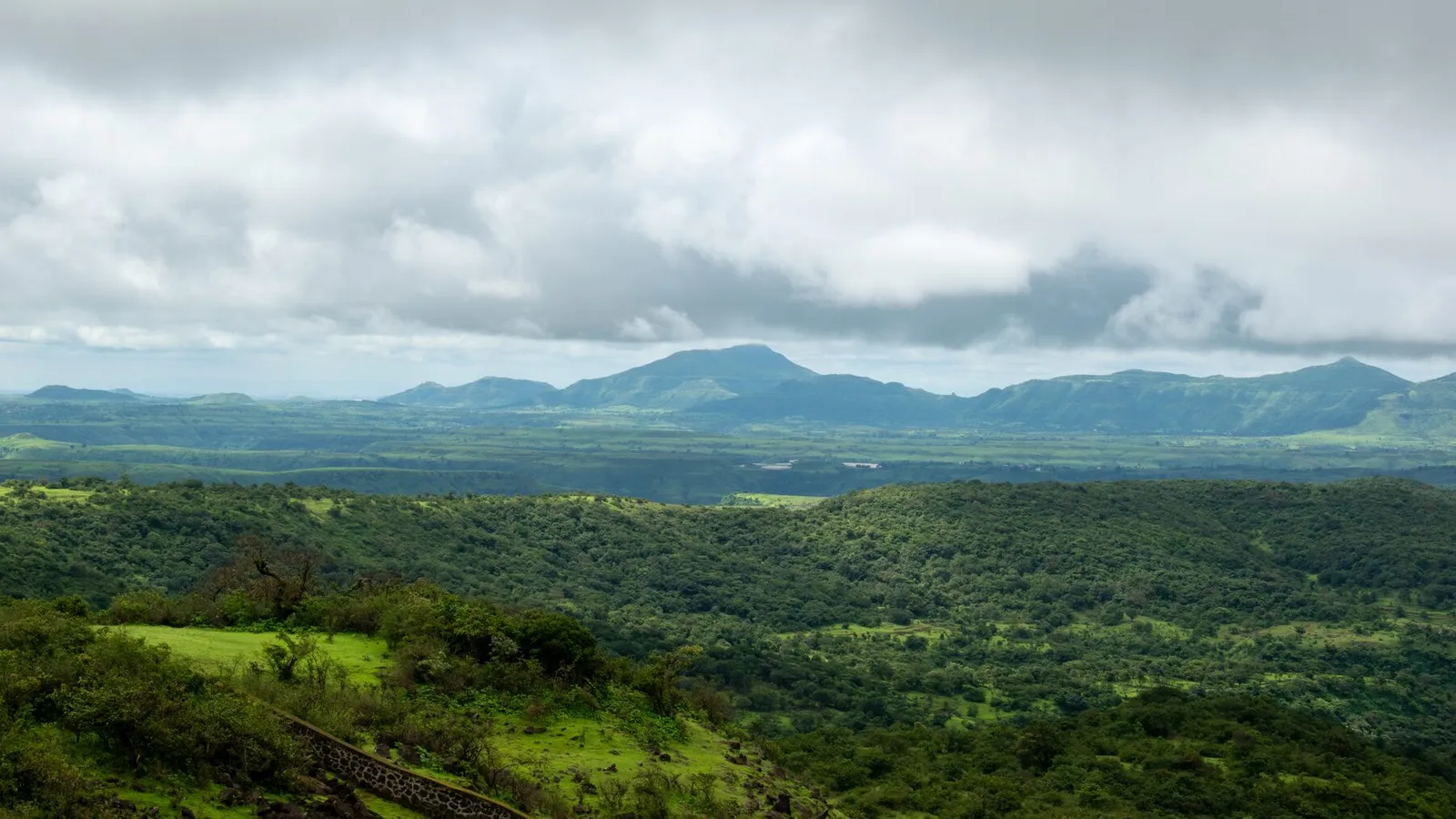
Bhimashankar stands in the Sahyadri hills of Maharashtra, in Pune district. The last part of the trip is a winding ghat road. This guide follows the visit in the order you meet it, using the Shree Kshetra Bhimashankar Trust's own schedule and rules. Read the current darshan notice before you set out, because it changes what time you can go in.
Getting to the temple
Maharashtra Tourism gives Karjat as the closest railway station and says a local taxi or bus from there covers the rest. Pune International airport is 125 km away, and the state page says travellers can hire private taxis or take state-run buses from Pune to the temple. By road, the state page gives the distance as 223 km from Mumbai, 125 km from Pune and 230 km from Nashik. Walkers can take a trek route in from Khandas village. Full routes are on the how to reach Bhimashankar page.

Darshan hours and the day schedule
The trust's normal daily schedule runs like this. Remember that the current notice limits darshan to 7:00 AM to 11:00 AM.
| Time | What happens |
|---|---|
| 5:00 AM | Temple opens |
| 5:00 AM to 5:30 AM | Worship |
| 5:30 AM to 12:00 noon | Darshan and abhishekam |
| 12:00 PM to 12:20 PM | Naivedyam puja (offering) |
| 12:20 PM to 2:45 PM | Darshan and abhishekam |
| 2:45 PM to 3:20 PM | Worship |
| 3:20 PM to 7:30 PM | Dev darshan |
| 7:30 PM to 8:00 PM | Worship |
| 8:00 PM to 9:30 PM | Dev darshan |
| 9:30 PM | Temple closes |
While the construction runs, the trust limits darshan to the morning window. When the work is finished, the normal schedule above applies. The trust's schedule page also lists a rule for some festival days: on Akhand Harinam Week and Rudra Swahakar, there is no entry into the temple premises after 11 am. Check the Bhimashankar temple page for the latest position before you plan the day.

Dress, footwear and conduct
The trust's rules are direct, so read them before you reach the gate.
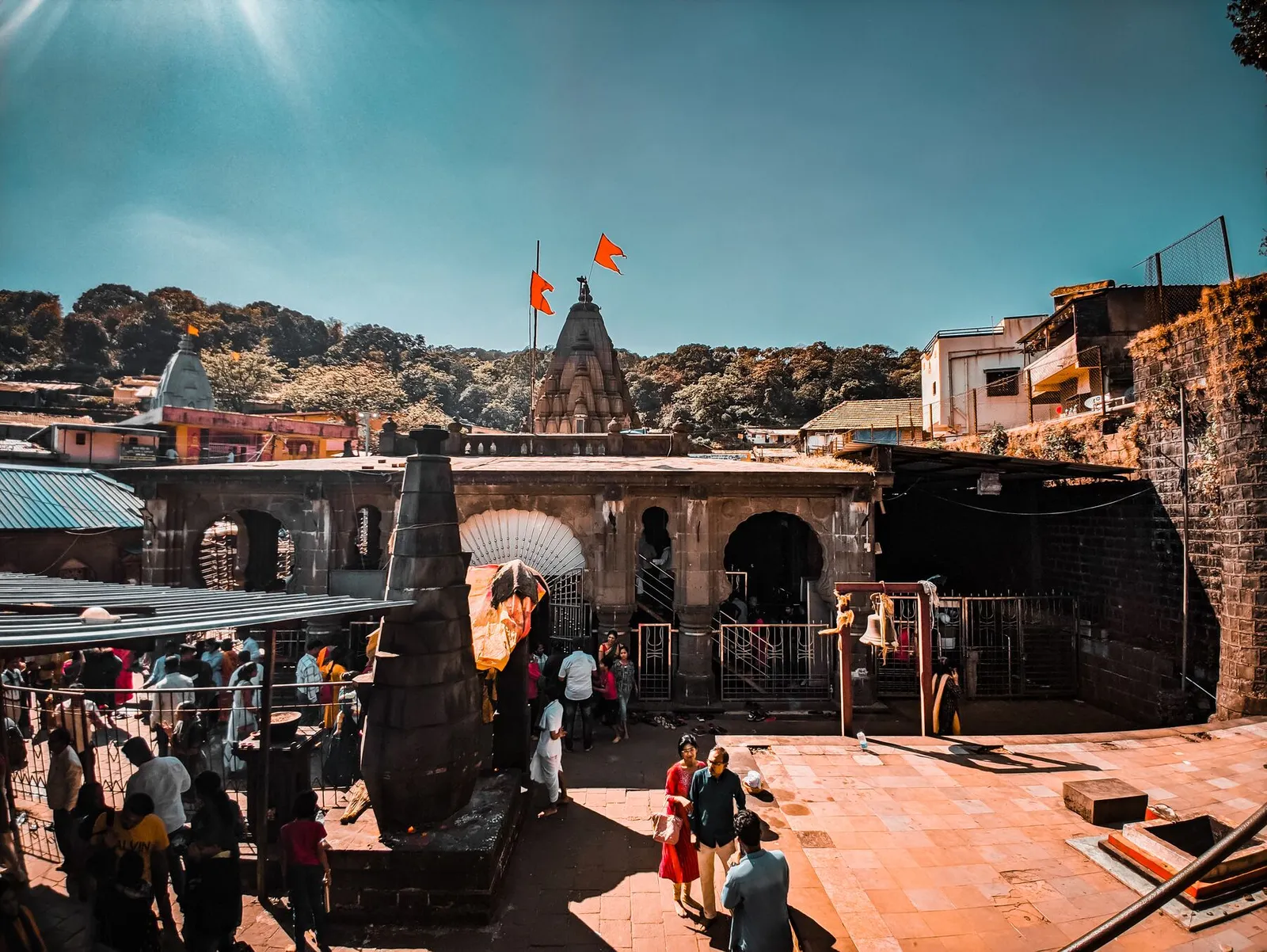
The trust asks visitors to take a bath and wear clean clothes before entering the temple. No footwear is allowed anywhere in and around the temple premises, so plan to leave your shoes somewhere safe before you walk in. Helmets, hats and any other head guard are not allowed inside the premises. The trust also advises against carrying too much jewelry and cash.
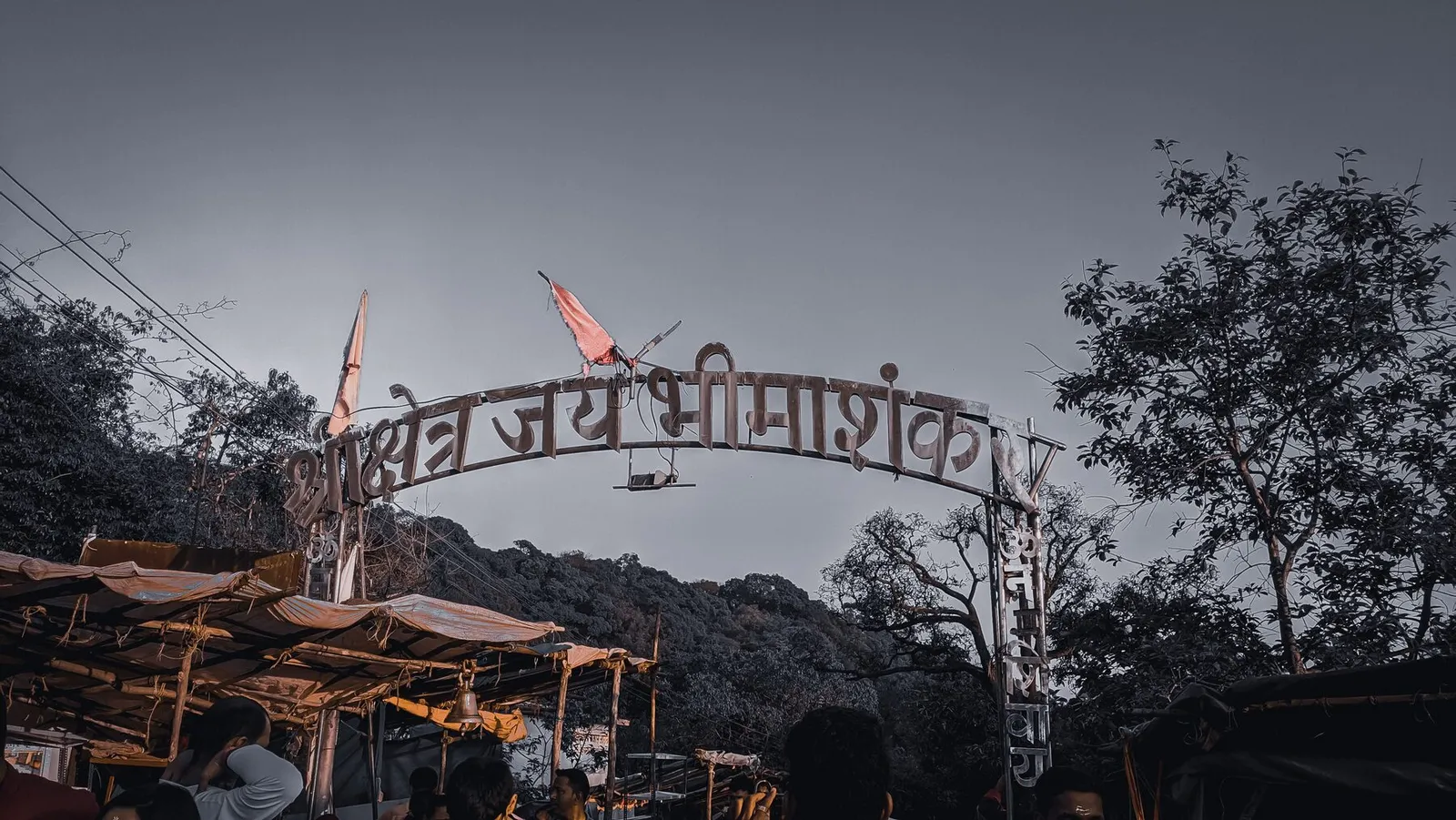

The trust asks visitors to keep absolute silence inside the temple and to chant "Om Namah Shivaya" while they focus on Lord Shiva. Do not prostrate in the temple, and do not throw offerings or tirthas in the premises. Do not eat meat or drink alcohol or other intoxicants within the premises, and do not carry any weapon. Avoid any act of violence or harshness. The trust asks visitors not to rush for darshan, to wait for their turn, not to spit, and not to encourage beggars. The trust also asks pilgrims to book travel and accommodation in advance.
The temple and its story
The trust's history page tells how the demon Tripurasura did penance in the Bhimashankar forest in the Treta Yuga and gained immortality on the condition that he work for the good of people. Later he troubled people and the other gods, who went to Shiva. Shiva prayed to Goddess Parvati, known there as Kamalja Mata, and together they took the form called Ardha-Narya-Nateswara and killed Tripurasura on Kartik Purnima, which the trust calls Tripuraari Purnima. The trust's about-the-temple page says the name Bhimashankar comes from the Bhima river, which is said to have evaporated during the war between Shiva and Tripurasura.
The trust's about-the-temple page describes the temple as a blend of old and new structures in Nagara style, built in the 13th century, with the sabhamandap added in the 18th century by Nana Phadnavis. It also says the temple is in Hemadpanthi style and decorated with Dashavatara statues. A bell weighing about 5 maunds stands near the temple with 1721 AD inscribed on it. The page says Chhatrapati Shivaji Maharaj is said to have donated the temple to facilitate worship. The same page names Bhimashankar as one of the twelve Jyotirlingas.
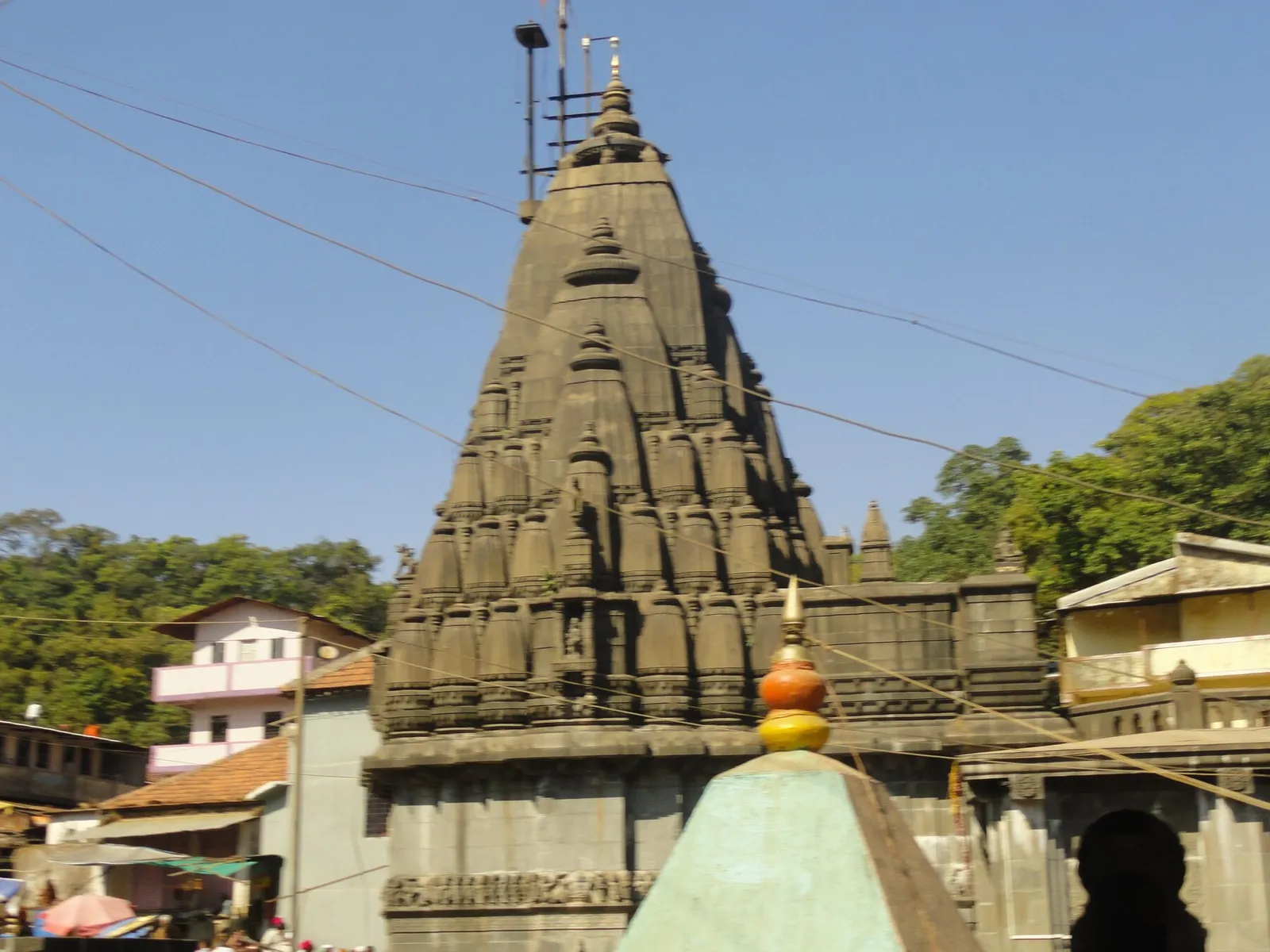

Around the temple
The trust names Kamalaja Devi Temple as the nearby shrine most closely tied to the temple. The trust's about page says Kamalaja is an incarnation of Parvati who aided Shiva in the war against Tripurasura. Other places the trust mentions near the temple include Mokshkund, Gupt Bhimshankar, Sarva-Teerth and Sakshivinayak. More is on the nearby places page.
The trust's about page also says the area is a wildlife sanctuary in the Western Ghats, with a rare animal, the Malabar giant squirrel, found in the deep forest.
Festivals
The trust's schedule lists a Maha Shivratri Yatra on Magh Kr. 13 and 14, with a mahaarti at 7:30 PM and a palanquin ceremony at 10 PM. On Kartik Purnima, which the trust calls Tripuraari Purnima, it lists a mahaarti at 8 PM, a palkhi of Kamaljadevi around the Bhimashankar temple at 9:30 PM, and after 10 PM a palkhi from the temple to Kokan Kada and the Kamalja temple and back. See the Mahashivratri festival guide for more.
Planning the visit
- Stay: the site's record lists trust rooms, an MTDC resort and village stays. Options are on the where to stay page.
- Booking: the trust asks pilgrims to book travel and accommodation in advance. Booking details are on the booking page.
- Contact: the trust's schedule page lists 02135 222 880 and the email [email protected]. Call before you travel to confirm the current darshan hours.
- Wider trip: if you are building a longer journey around the twelve Jyotirlingas, see the circuit page.