
Grishneshwar stands at Verul, near Chhatrapati Sambhajinagar in Maharashtra. It is the twelfth of the twelve Jyotirlinga temples. This guide draws on the Maharashtra Tourism page for the temple and on this site's own travel data. The state page is short. It does not give darshan or aarti timings, so check those locally before you go.
Before you go in
The state tourism page records one tradition for the temple itself. Male devotees enter the inner sanctum bare-chested, and the page describes this as a mark of humility and respect. The page does not list a wider dress code, so plan clothing that makes this easy.
The state page describes this as a unique tradition of the temple. The page's text does not mention women in it. If you are a man planning to enter the inner sanctum, wear clothing you can easily take off at the entrance. Check with the temple on arrival for any current arrangements.

Getting to Verul
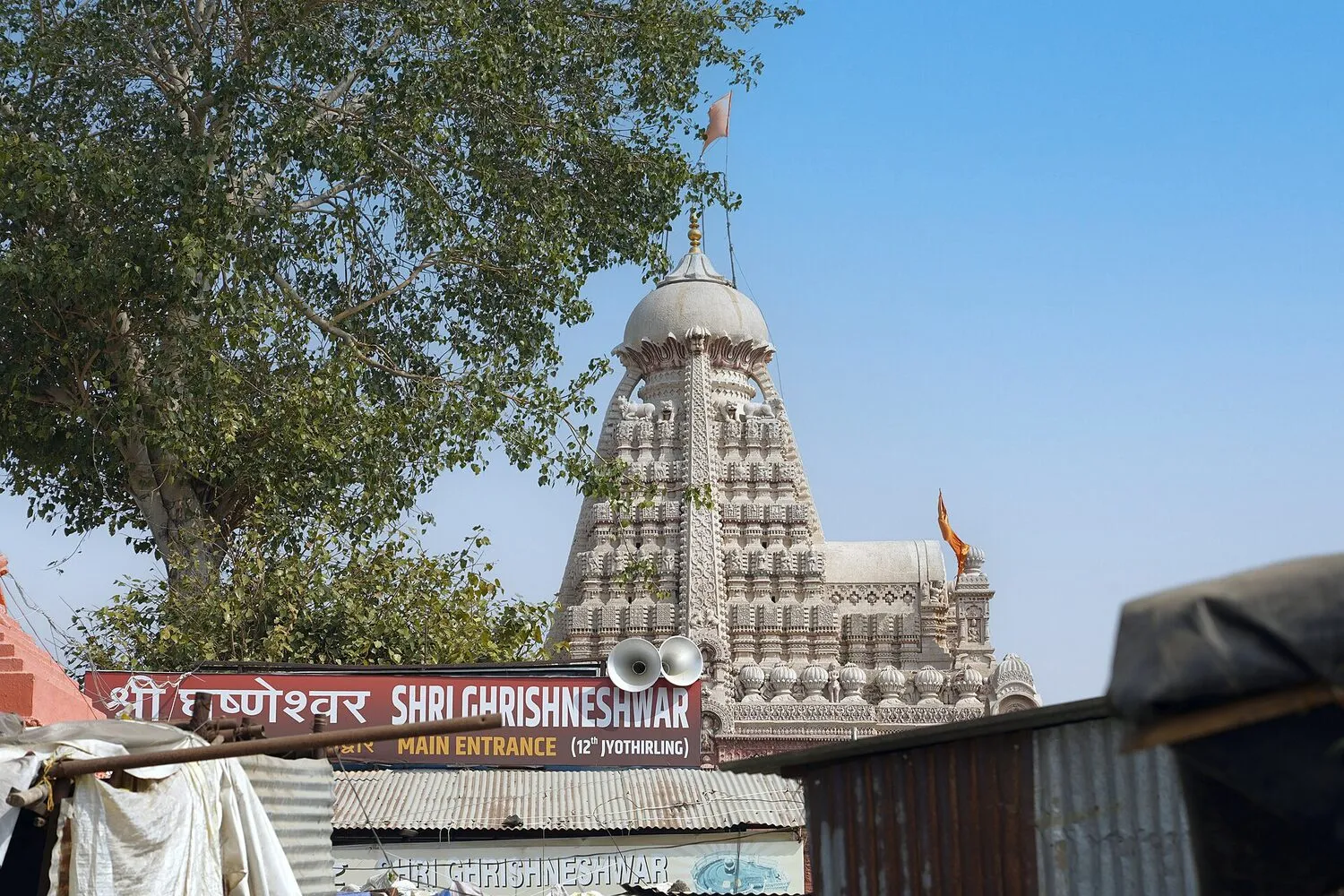
The state page places the temple in the village of Verul, near Aurangabad (now Chhatrapati Sambhajinagar). The district site puts the railway station about 29 km from the temple.
The state tourism page puts Aurangabad airport (IXU) about 40 km from the temple and says regular flights link it to major Indian cities. For the road leg, the page says state transport buses and private taxis run often from Aurangabad and the surrounding area.
The state tourism page names Aurangabad Railway Station (AWB) as the closest option by train. The Chhatrapati Sambhajinagar district site puts the station about 29 km from the temple. Full routes are on the how to reach Grishneshwar page.

Planning the season
The state page says the temple is open to devotees all year round, and gives the best months as October to March, when the weather is cool. So the best months are about comfort, not about whether the doors are open.
The state page puts the best months at October to March. It notes that Mahashivratri is usually in February or March and calls it one of the most significant festivals at the temple, with night-long vigils and special poojas that draw pilgrims from across the country. Expect larger crowds around that festival. The Mahashivratri festival page covers the festival in more detail.
What the temple is known for
The state page names three rituals that devotees take part in here, among others.
According to the state tourism page, devotees take part in rituals including the Panchamrut Pujan, the Rudra Abhishek and the Mahamrityunjay Jaap. The page also mentions daily aarti ceremonies. It does not give prices, booking routes or times for these rites, so ask the temple directly before you plan around one.
The temple's history and design
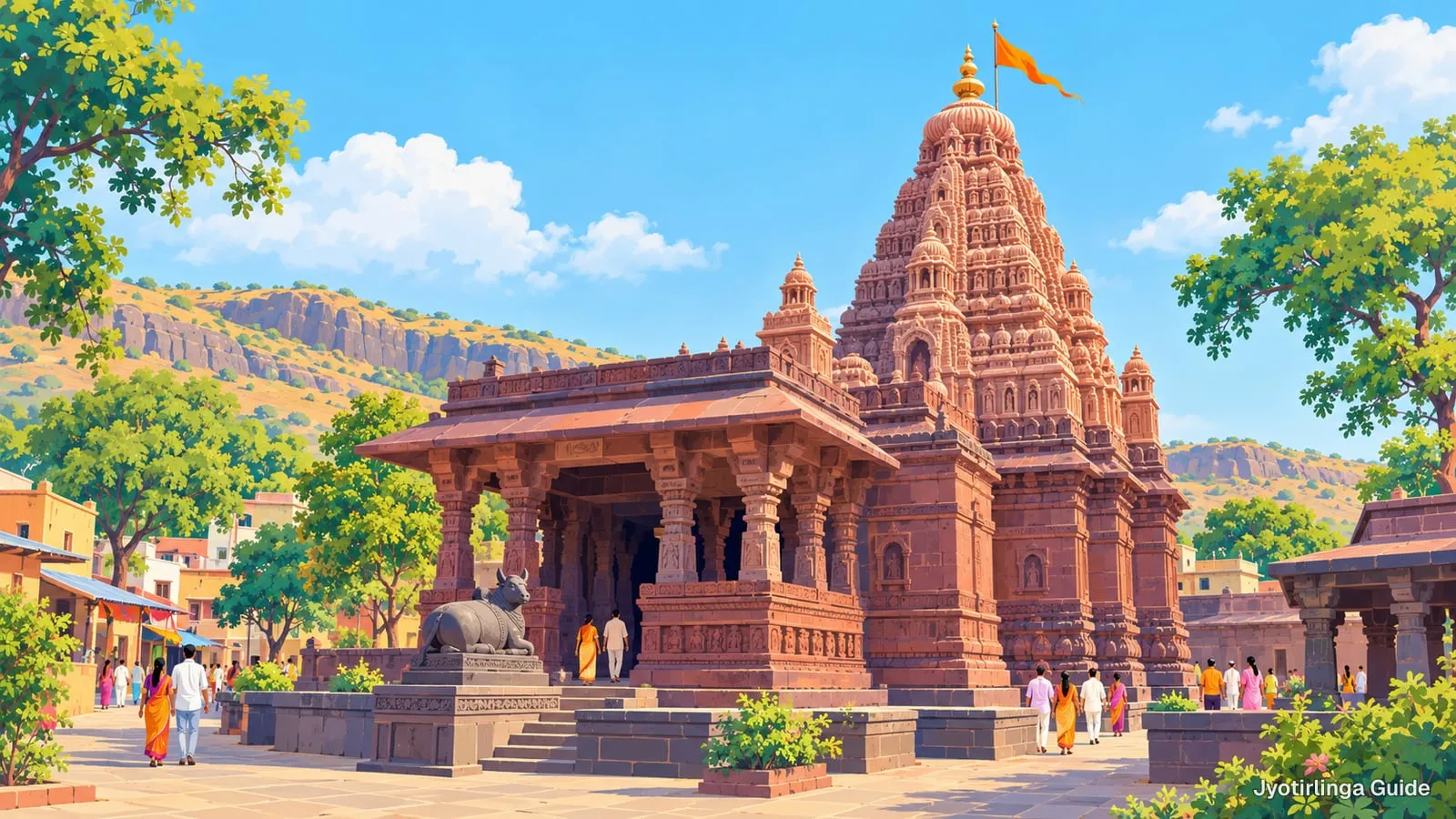
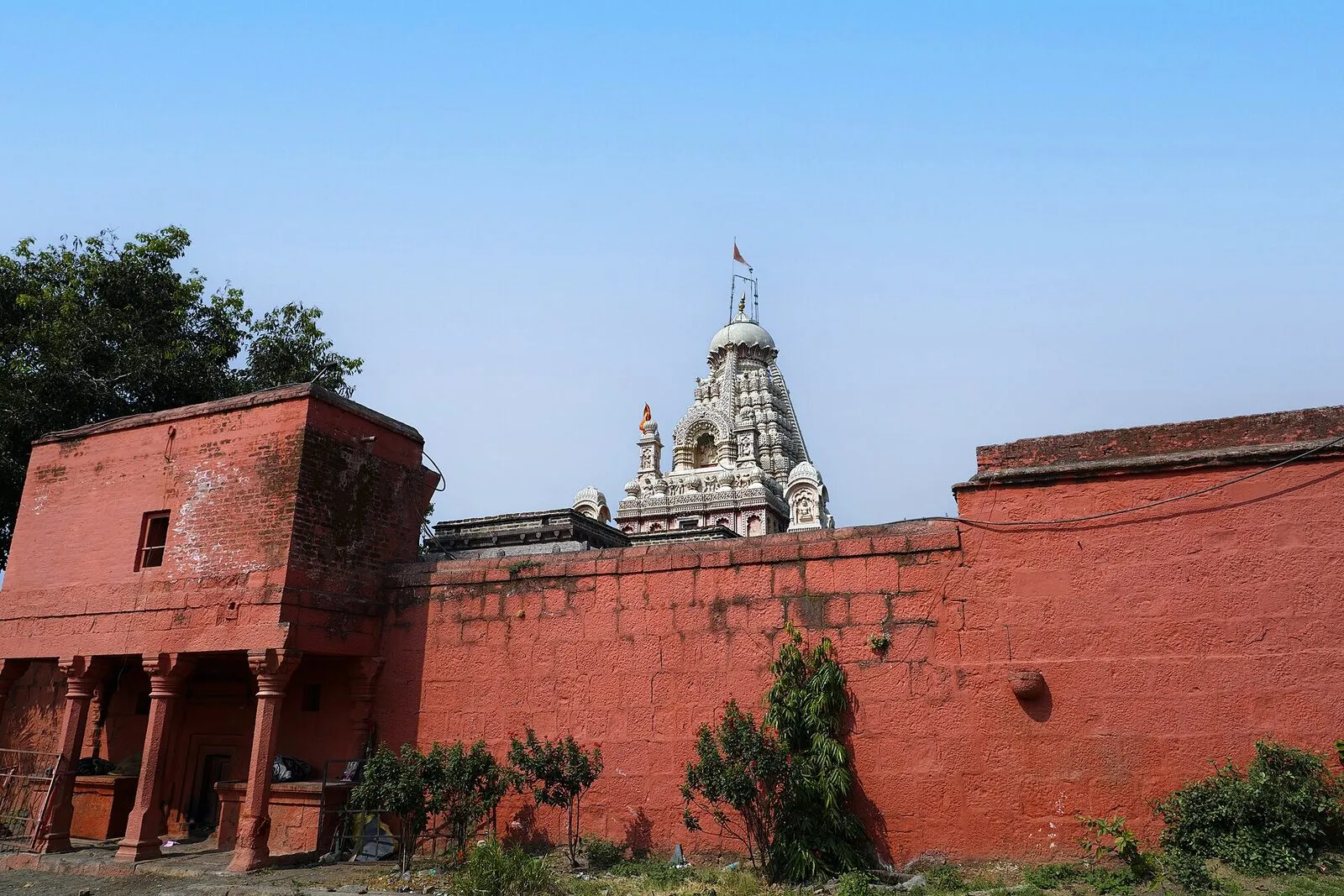
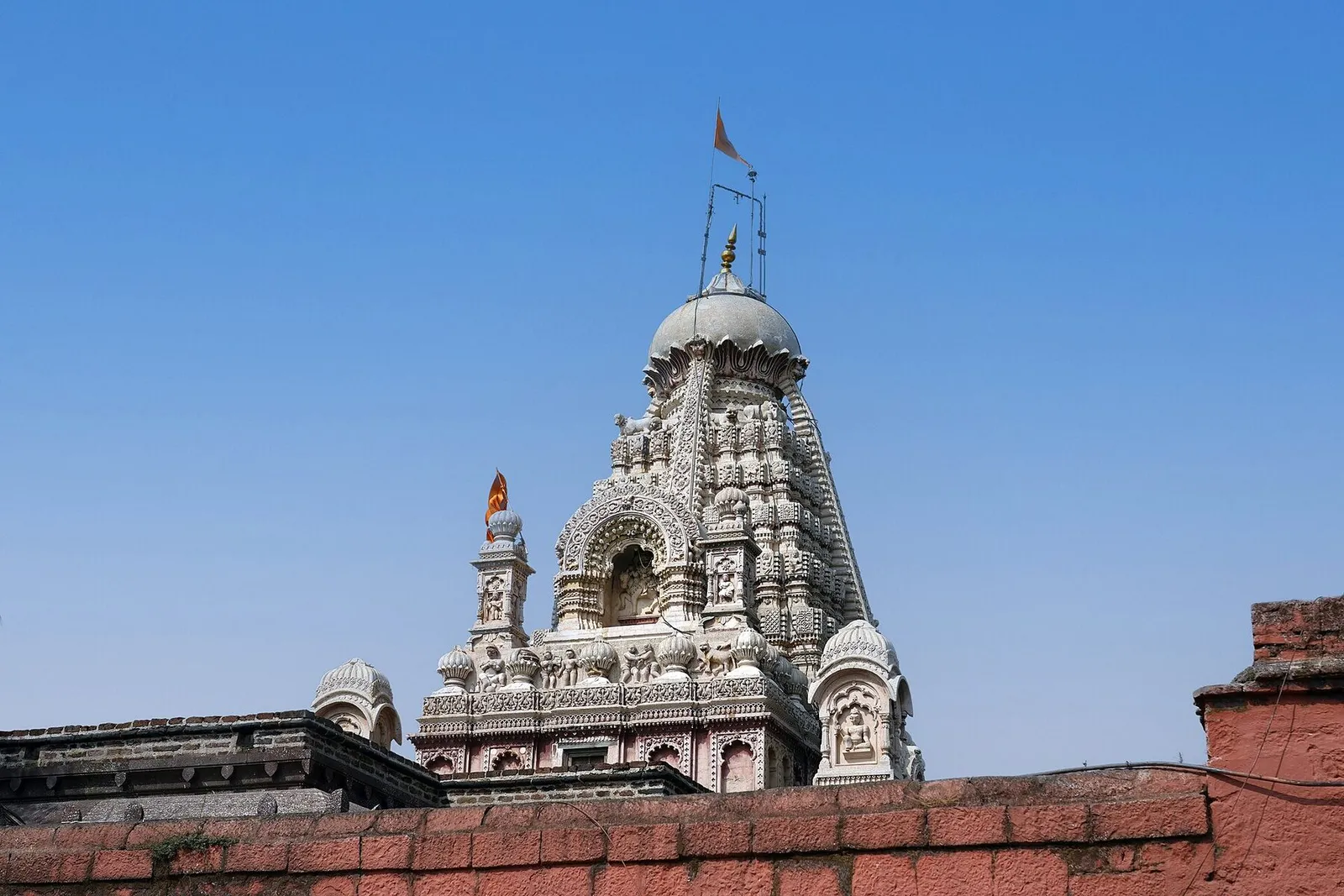
The state tourism page describes the temple as built in red volcanic rock in the Hemadpanti style. It has a five-tiered shikhara, which is the tall tower above the sanctum, and a court hall on 24 pillars with a statue of Nandi. The jyotirlinga in the sanctum faces east.
The state page records mentions of the temple in the Shiva Purana and the Skanda Purana. It says the temple was destroyed in the 13th and 14th centuries under the Delhi Sultanate. It was rebuilt, among several reconstructions, in the 16th century by Maloji Bhosale, the grandfather of Shivaji Maharaj, and restored in the 18th century by Ahilyabai Holkar of Indore.

Nearby places
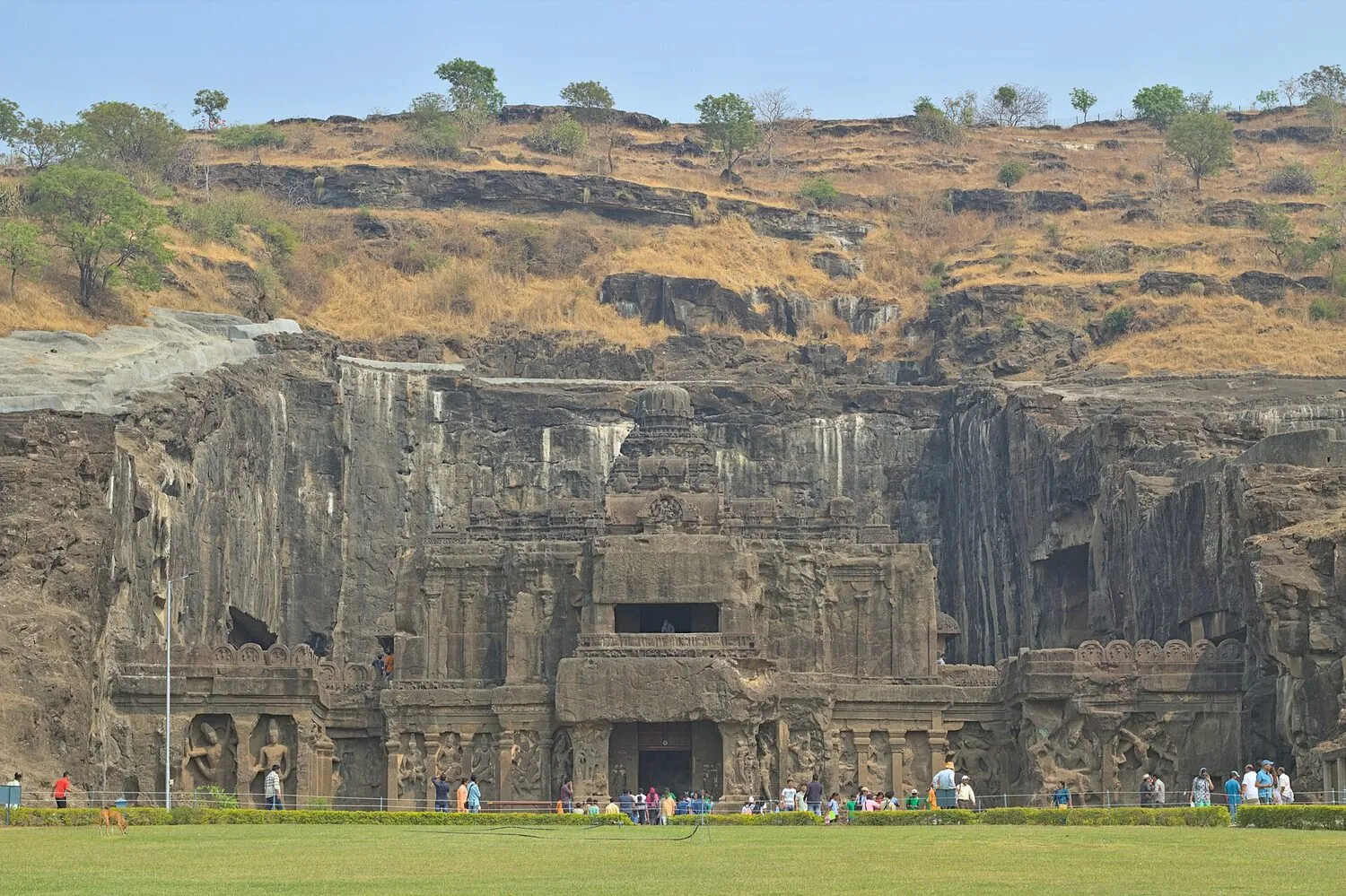
The Ellora caves are about 1 km from the temple, according to this site's notes. More places in the area are on the nearby page.

Where to stay
Stays near the temple are mostly in Verul village, and there are hotels in Sambhajinagar. The where to stay page lists the options.