
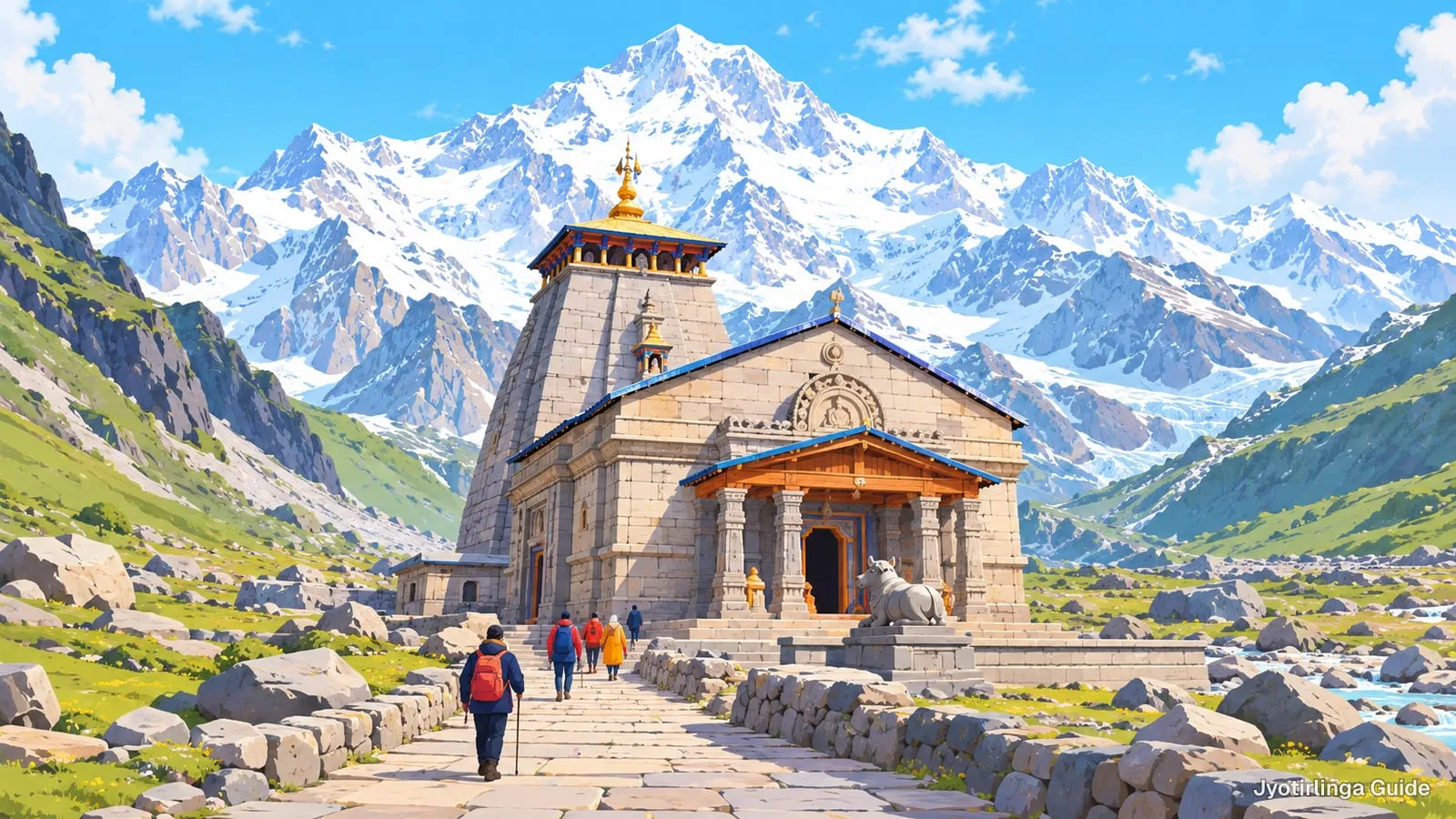
Kedarnath stands on the bank of the Mandakini river in Rudraprayag district, Garhwal, in Uttarakhand. The road stops at Gaurikund, and the temple is reached on foot, by pony or by helicopter. This guide follows the visit in the order you meet it, using the rules that the Shri Badarinath Kedarnath Temple Committee publishes on its own site.
Getting up to the temple
The committee's Kedarnath page says the temple is a 16 km trek from Gaurikund, the nearest place. Its Gaurikund entry on the other temples page says the road to Kedarnath ends at Gaurikund and gives the trek as 14 km, so the figure differs between its pages. The Kedarnath page is the one used here.
Distances to the railway and the airport are also given two ways. The overview block on the Kedarnath page gives Rishikesh station at 228 km and Jolly Grant airport at 248 km. The how-to-reach text lower on the same page puts Rishikesh station 243 km before Gaurikund and Jolly Grant 235 km from Kedarnath. Check the distance before you plan the last leg.
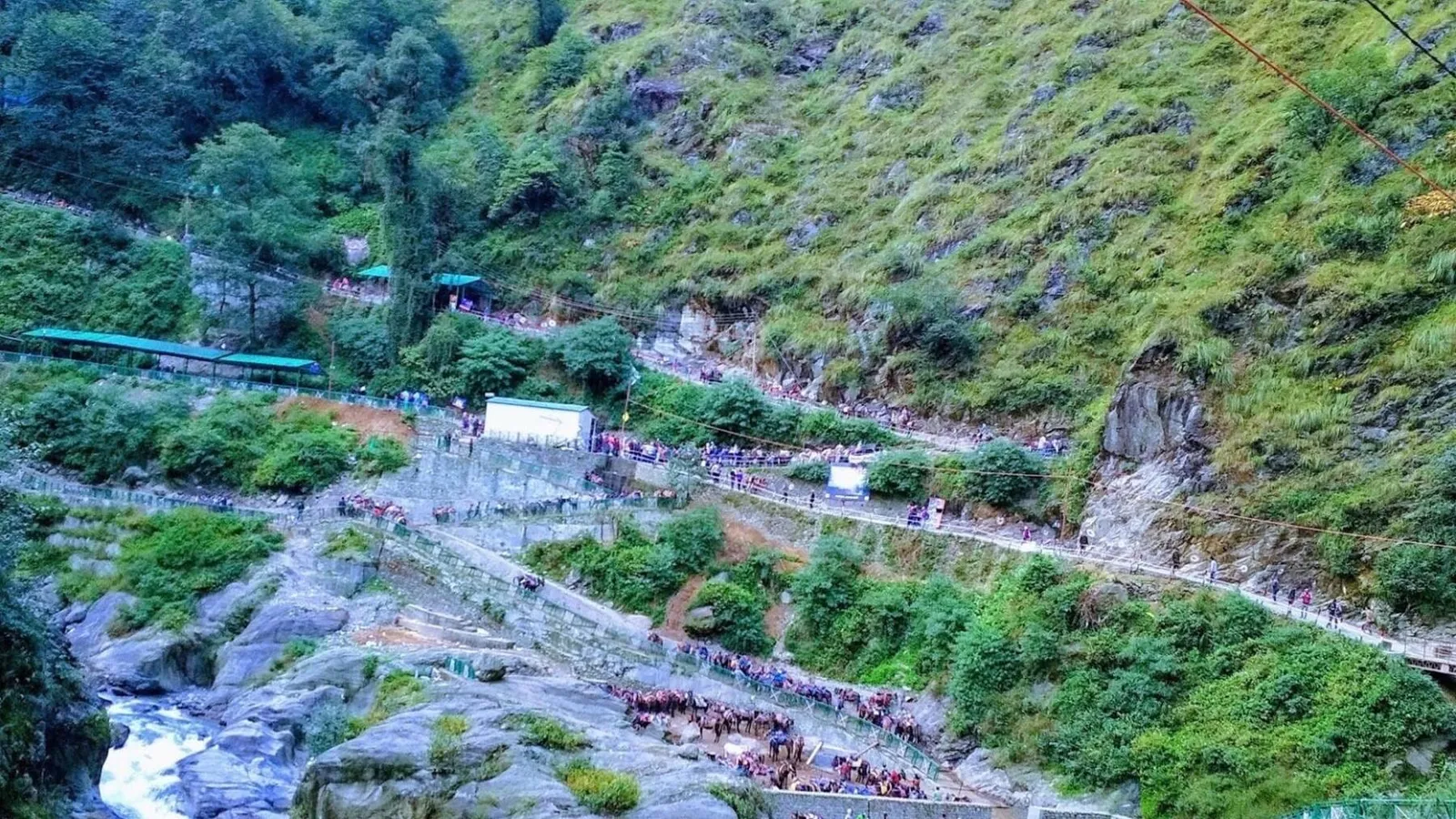

The committee's Kedarnath page names the trek from Gaurikund, and says pilgrims who stay at the nearby places can complete darshan in a single day trip by helicopter or pony. The committee's home page says the helicopter shuttle ticket for Kedarnath can be booked on heliyatra.irctc.co.in only.
The committee's home page asks pilgrims to make sure of their yatra registration on registrationandtouristcare.uk.gov.in. Puja and other bookings are a separate step (see below). If you travel by your own vehicle, the home page links greencard.uk.gov.in, where you register the vehicle and generate the green card and trip card for the Char Dham shrines.
Booking pujas and darshan
Darshan itself is free and open to everyone in the season. What is bought ahead is a puja, a path, an aarti or a bhog. The committee's home page says prior registration is mandatory for puja, path, aarti and bhog booking, and that the registration must be from an Indian mobile number.
The committee's home page showed puja availability for October and November 2026 when it was read on 19 October 2026. For Kedarnath it gave an earliest date of 20 October 2026 and 3,200 available puja seats. Seat counts change, so check the live table before you travel.
The committee's terms for Kedarnath pujas say to carry a valid government photo ID with the attending-puja receipt and show both at the puja counter during the visit. The IDs listed are a voter ID, Aadhaar card, driving licence, passport or PAN card. Foreign pilgrims can use a valid passport and visa as ID. The receipt covers the puja only: boarding and lodging are your own arrangement.
The committee's terms say the amount paid for any booking is non-refundable and cannot be transferred to another name or date, and the same applies to donations. The committee also reserves the right to change, cancel, amend or reschedule any booked puja, path, aarti or bhog. If you cannot attend an attending puja, the terms say a priest performs it in your name and gotra. Donations get a 50% exemption under section 80G of the Income Tax Act 1961, and the committee says online donations are only open in Indian rupees.
Puja timings and fees
The committee lists its fees on the Kedarnath page. The rates below are in rupees, as the committee gives them. The table there is longer: it also lists more evening paths, bhog, long-term and special-occasion pujas.
| Puja or aarti | Timing | Rate |
|---|---|---|
| Mahabhishek puja | Morning | Rs 8,500 |
| Rudrabhishek puja | Morning | Rs 6,500 |
| Laghurudrabhishek puja | Morning | Rs 5,500 |
| Shodashopachaar puja | Morning | Rs 5,000 |
| Ashtopachaar puja | Morning | Rs 850 |
| Panchopachaar puja | Morning | Rs 850 |
| Entire puja of the day | Morning | Rs 26,000 |
| Shiv Ashtotari path | Evening | Rs 900 |
| Entire evening aarti | Evening | Rs 2,500 |
The committee's terms for Kedarnath pujas ask pilgrims booked for an early morning abhishek to take the puja slot timing at the puja counter one day before. The Kedarnath terms do not print a start time for the abhishek. The 4:00 AM to 6:30 AM window on the same page sits under the terms for Badarinath, so it is not used here.
The committee's terms for Kedarnath say the evening aarti starts around 6:00 PM in the summer season. Show the aarti receipt at the puja counter 15 to 20 minutes before the aarti. The Kedarnath terms give no end time.
Inside the temple
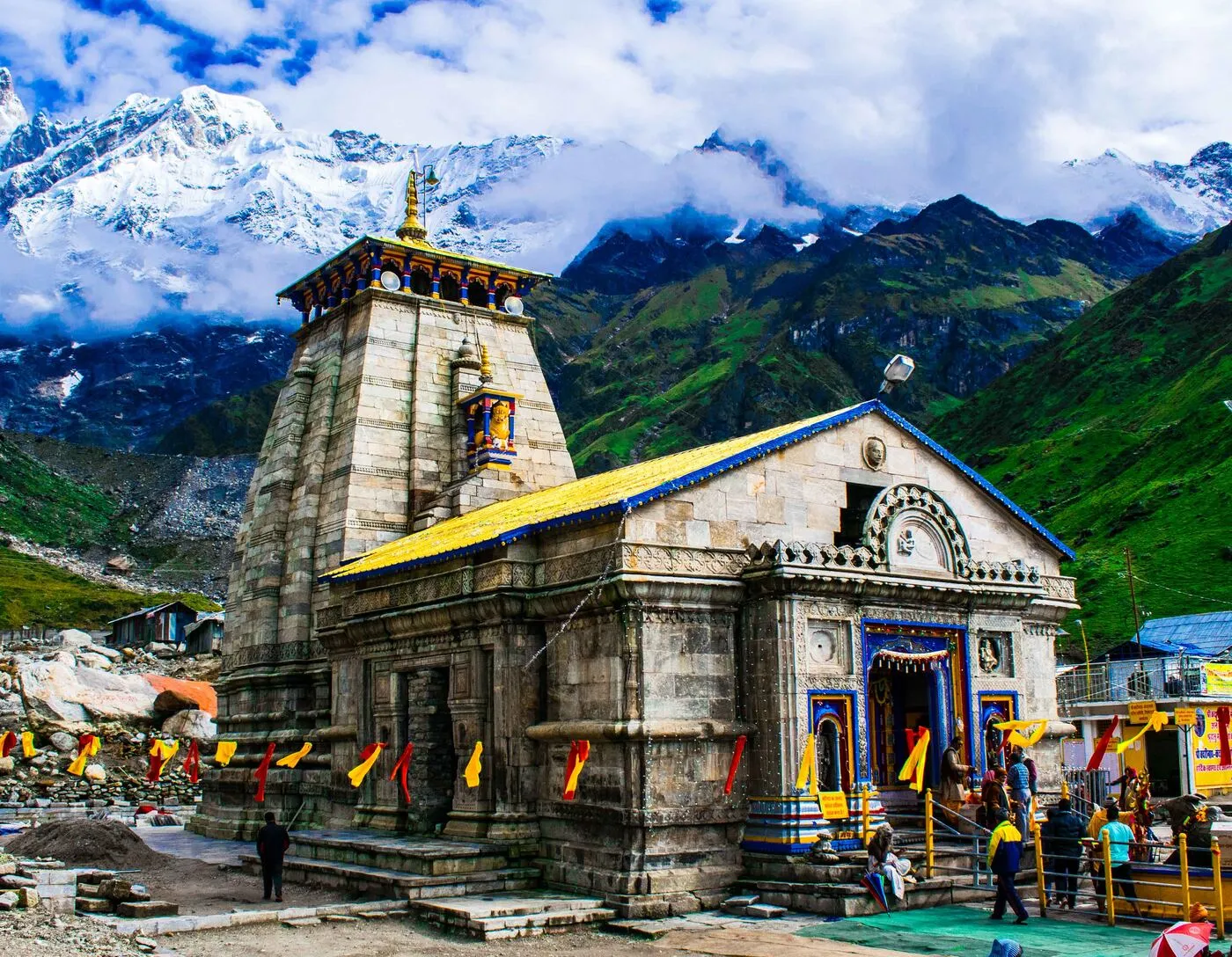
The committee describes the temple as built of massive grey stone slabs over a large rectangular platform, with large grey steps leading up to the sanctum.
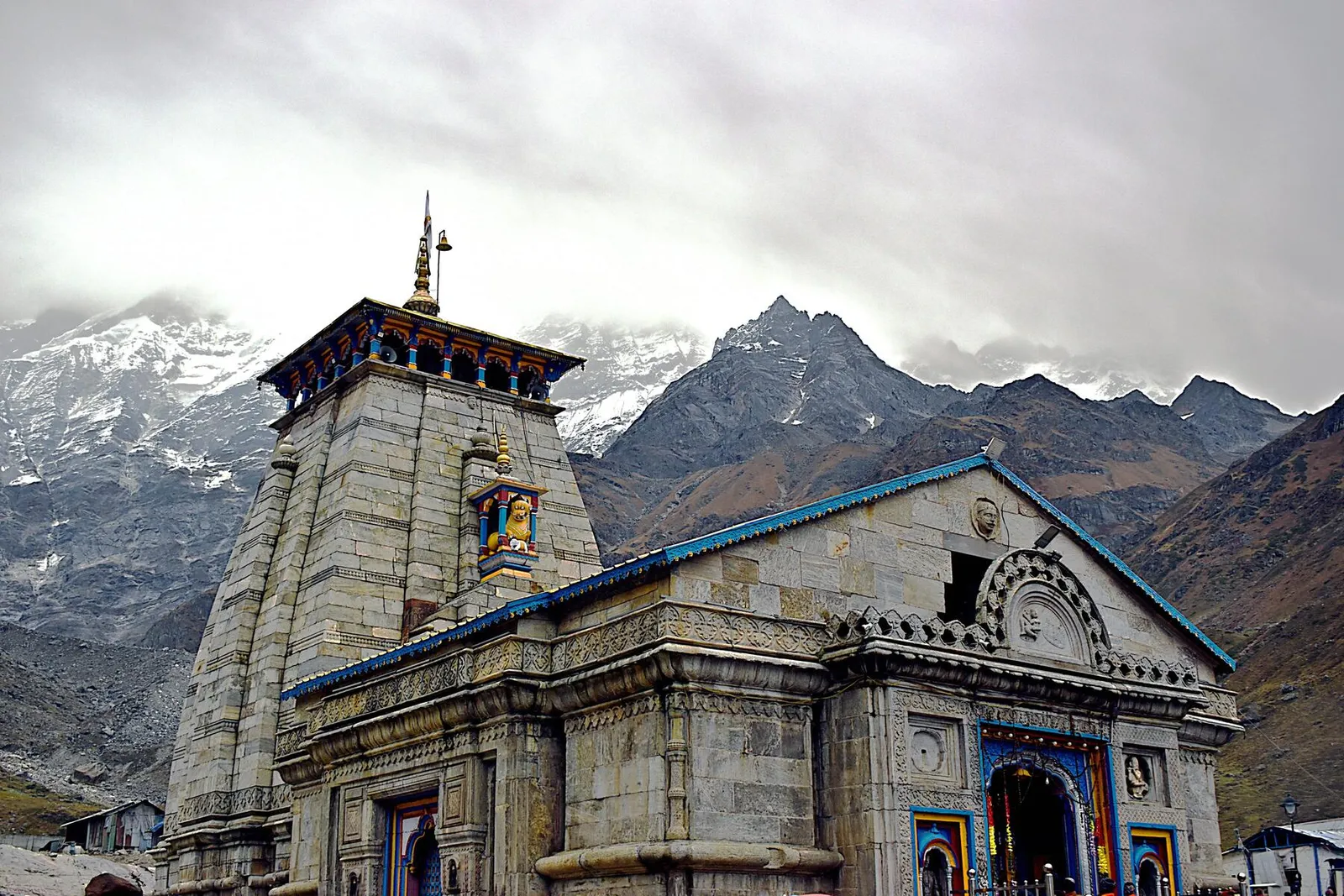

The committee says the inner sanctum holds a conical rock formation, worshipped as Lord Shiva in his Sadashiva form. Priests and pilgrims perform the pujas and archanas on this form. A large statue of Nandi stands outside the temple door as the guard. The committee also says the temple has a Garbha Griha for worship and a Mandap for pilgrims and visitors.
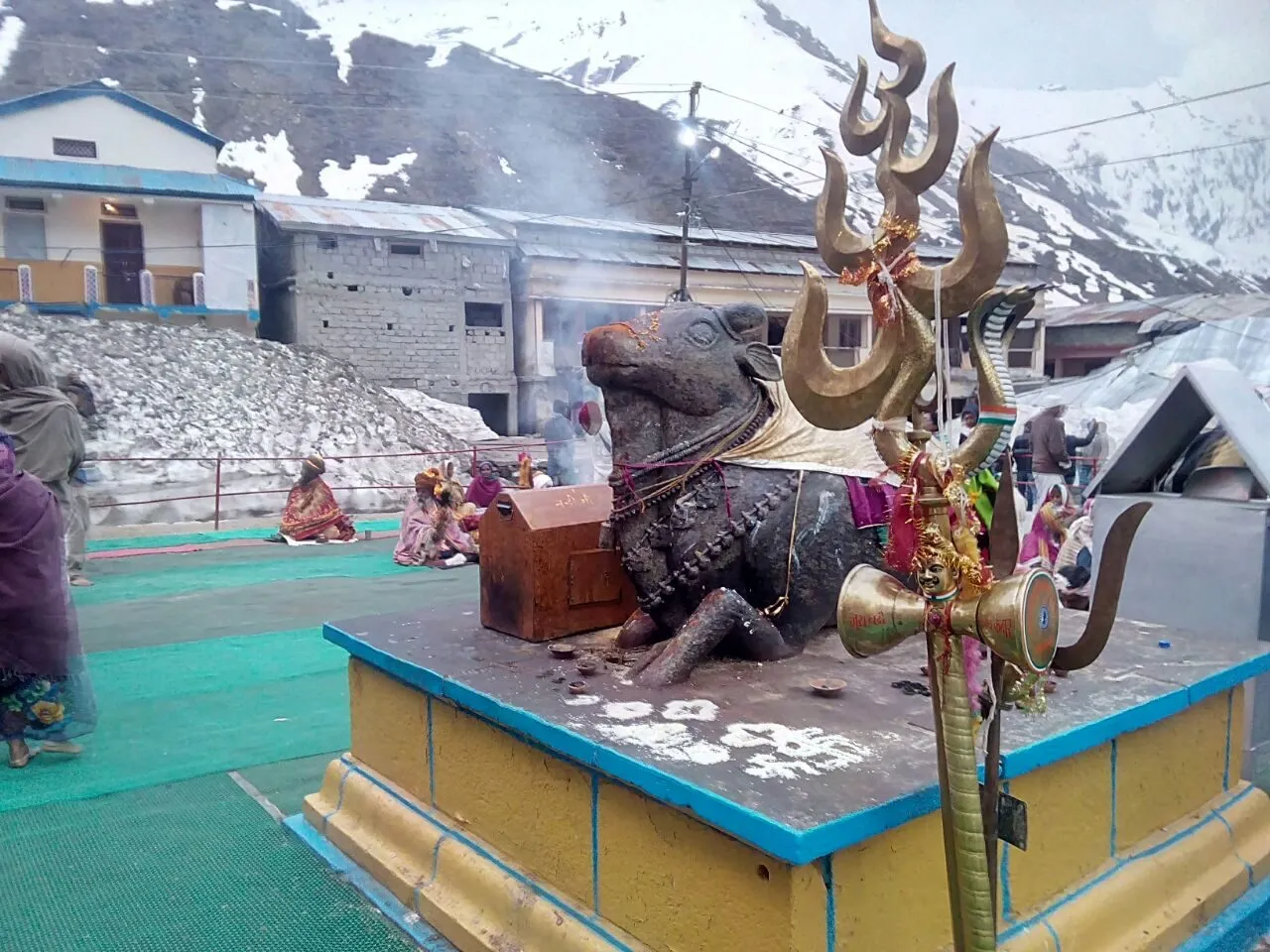

The committee says Kedarnath gets heavy snowfall, and the temple is covered with snow from November to April. At the start of winter, normally in the first week of November, a symbolic statue of Lord Shiva is carried down to Ukhimath on a date announced in advance. Pujas are then done at Ukhimath from November to May. In the first week of May, on a date the committee announces in advance, the statue is carried back to Kedarnath, and the doors are opened to pilgrims.
Season and timing
The committee lists May to November as the best time to visit. It says the shrine generally closes on the first day of Kartik, which falls in October or November, and reopens in Vaishakh, which falls in April or May. The dates are announced in advance each year, so check the committee's notice before you book. For the monsoon, July to mid-September, the committee says the region is prone to occasional landslides and travel can be difficult.

Where to stay
The committee says there are dharamshalas of various organisations at the temple at nominal charges. Private hotels are at Sitapur, near Sonprayag, around 20 km from Kedarnath, and BKTC guest houses are at Sonprayag and Guptkashi. The committee's accommodation terms say check-in is after 12 noon and check-out is before 10 AM. A stay is limited to one night, and a valid government ID is needed at check-in. The committee says it has no cancellation policy for room reservations, and a room booking cannot be transferred. More is on the where to stay page.
The committee's Kedarnath page also lists an HDFC ATM, a medical facility run by the UCDDMB and various food joints near the temple.
Getting there by rail and air
The committee's Kedarnath page names Rishikesh as the nearest railway station. The Indian Railways station list gives its code as RKSH. Yog Nagari Rishikesh (YNRK) is a different station in the same list. The committee's Yatra at a glance page calls Haridwar the traditional starting point of the Char Dham yatra and says it is easy to reach by road and train, including from New Delhi. For air travel, the Kedarnath page names Jolly Grant airport, 35 km from Dehradun, and the Yatra at a glance page says pilgrims can fly to Dehradun and go on by road. The routes and distances are on the how to reach Kedarnath page.
The story
The committee gives the legend this way. After the Mahabharata war, the Pandavas sought Shiva's blessings to atone for killing men in the war. Shiva eluded them and took refuge at Kedarnath in animal form. When he dived into the ground there, his hump stayed on the surface, and the committee says this is the conical rock worshipped in the sanctum. The remaining parts of Shiva appeared at four other places, which are the other Panch Kedar shrines: Tungnath (arms), Rudranath (face), Madmaheshwar (belly) and Kalpeshwar (locks of hair with the head). The committee says the Kedarnath temple was originally built in the 8th century AD by Adi Shankaracharya, next to the site of an earlier temple built by the Pandavas. More is on the Kedarnath overview page and the nearby page.